





Mauricio Macri was celebrating winning the mayoral elections in the city of Buenos Aires last night after defeating Kirchnerist candidate Daniel Filmus in the run-off by 64.25% to 35.75%. The week leading up to the elections was dominated by accusations of dirty tricks but it seems another underhand campaign of sorts was being waged against him in the form of political stencil graffiti and propaganda. Exclusive photos by Buenos Aires Street Art.
Here’s some street art in La Boca neighbourhood in Bueons Aires made from newspaper depicting Argentine and Manchester City striker Sergio Aguero. The designs were made for the 2007 Nike commercial entitled Barrio Bonito.
New design by Cabaio Stencil in Colegiales painted a couple of days ago. Cabaio told Buenos Aires Street Art the design isn’t of anyone in particular but he’s joined up parts of distinctive faces including this moustache to form one portrait.
Argentine plastic artist Diego Perrotta has been working on his latest project called El Matasiete y los Guardiánes, a mural on the Imaginación building at Tecnópolis.
It’s winter in Buenos Aires and with the cold weather there’s no shortage of flu and common colds doing the rounds. A state of health emergency was declared in Greater Buenos Aires this time two years ago; and from April to July 24, 2009, there were more than 200 recorded deaths in Argentina due to the virus known as ‘gripe A’ or HIN1. The pandemic also led to a wave of graffiti depicting ‘la gripe porcina’ and the H1N1 virus, and pigs are still popping up around BA.
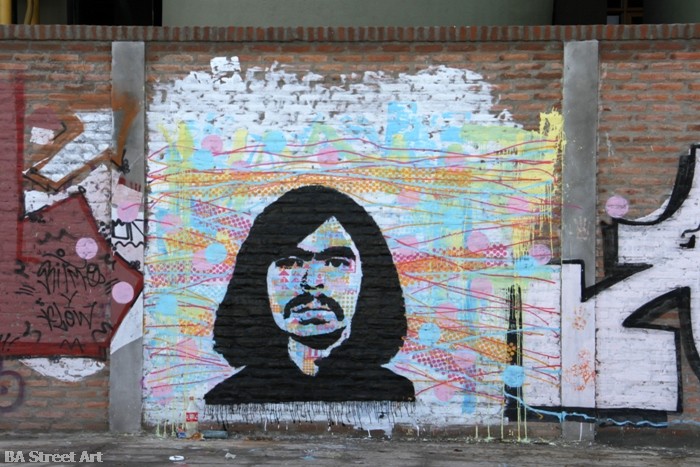
A famous mural painted in homage to Noberto ‘Pappo’ Napolitano by the artist and musician Alejandro Amaro has been painted over with the letters of a Chinese supermarket sign, much to the disgust of fans and local residents.
A ceremony was held today at the site of the AMIA building in Buenos Aires where on July 18, 1994, a terrorist bomb killed 85 people and injured 300. Argentina is home to the largest Jewish community in South America with more than 200,000 Jews. This mural by Kol-Kir was created in the neighbourhood of Villa Crespo in 2010 to commemorate the tragic event that took place at the Jewish community headquarters along calle Pasteur in Once.
Tecnopolis, the science, technology and art show opened in Villa Martelli in the Province of Buenos Aires on Friday. The 60 hectares site has dozens of pavillions dedicated to subjects such as Earth, Fire, Air and Water. Street artists Martin Ron, Lean Frizzera, Emy Mariani and Diego Cirulli have painted a series of murals in Plaza de la Memoria. And the exterior of a former warehouse building, that has been converted into a performance space, has been decorated by some of Buenos Aires’ best-known artists including Jaz, Ever, Mart, Roma, Tec, Triangulo Dorado and Nazza Stencil.
Blu, Os Gêmeos, Sam3, Ericailcane and Lucy Mclauchlan made some stunning murals for the Crono urban art project in Lisbon last year. Photos by Buenos Aires Street Art.
While in London this week we came across this new piece by Vhils in Shoreditch. The Portuguese street artist chips off tiny bits of plaster and concrete from walls in his unique style to leave amazing textured artworks.
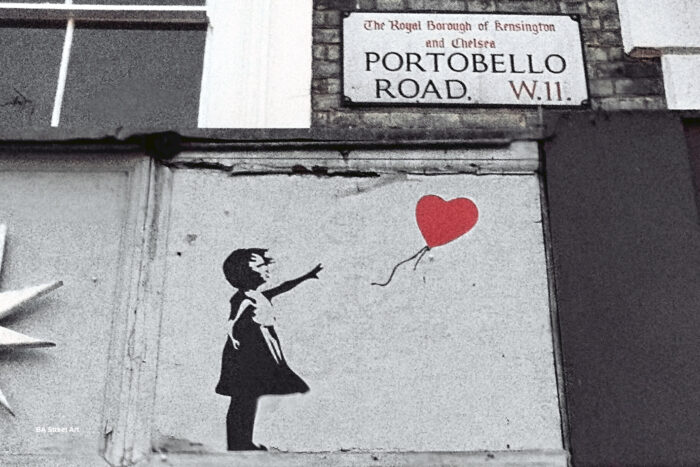
Banksy has dozens of stencils on the streets of London which are still intact. One of the best ways to recognise or find a Banksy is if it’s covered in perspex. Here are a few classic Banksy artworks that Buenos Aires Street Art photographed around Shoreditch and Notting Hill.
Belgian street artist Roa is famous for the amazingly detailed animal murals that he’s painted all over the world . Here are photos we shot of street art by Roa in East London during a tour with Street Art London.

