
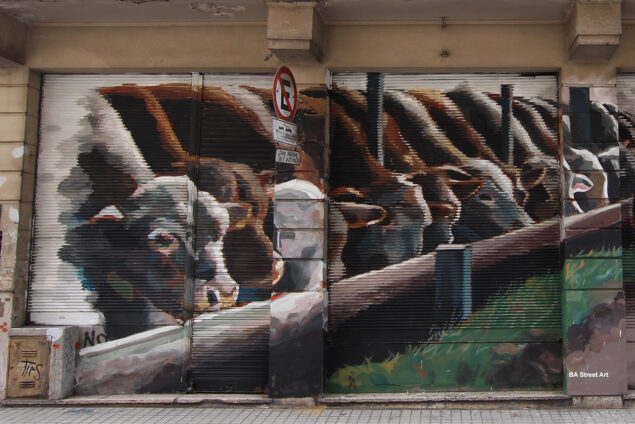
Argentina is famous for its beef steaks and consumption of meat. Unsurprisingly street art featuring cows, love for meat, as well as protest art relating to animal cruelty, veganism and vegetarianism can be found all over Buenos Aires. Photos by Buenos Aires Street Art.
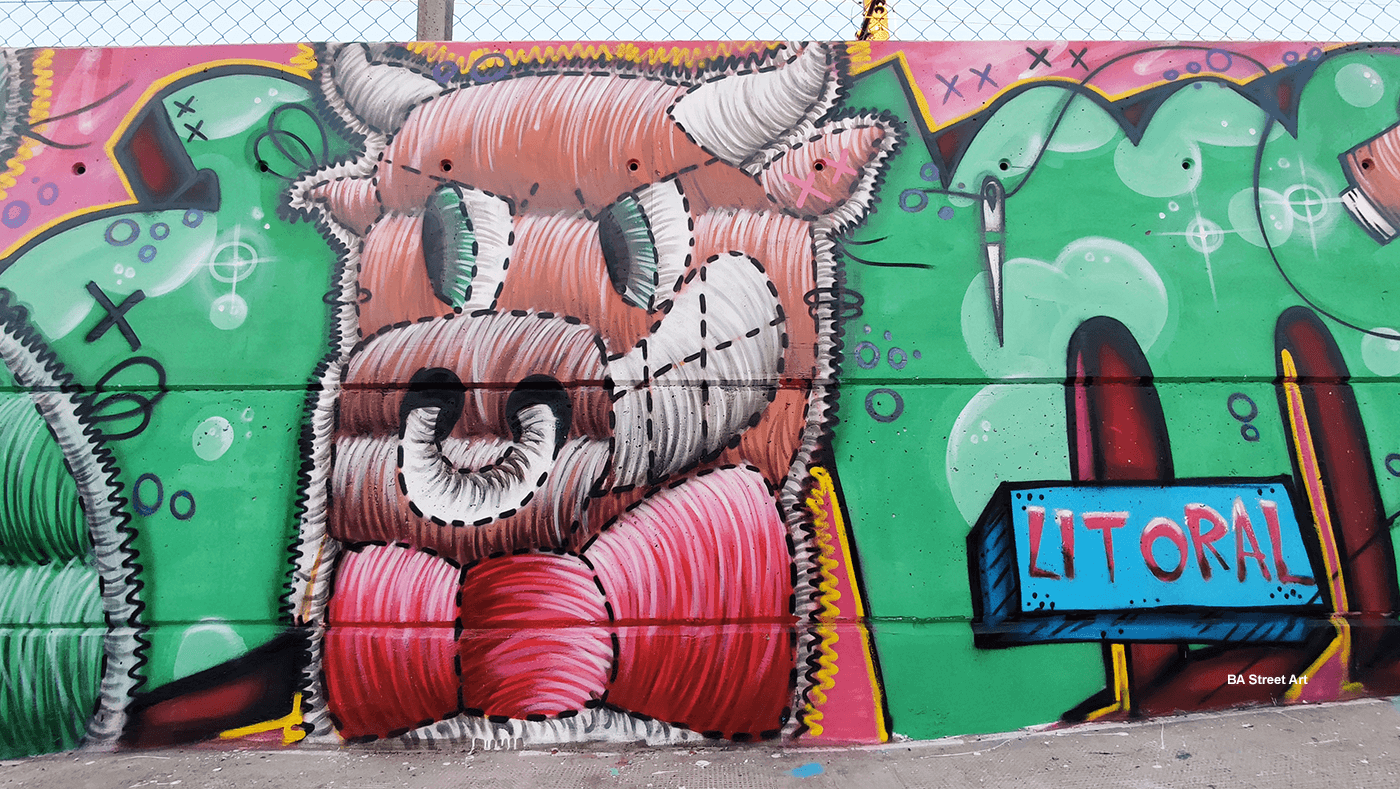
Cow graffiti in Alejandro Korn, Buenos Aires (photo © BA Street Art)
Argentina is the world leader in beef consumption, with citizens eating roughly 46 to 49 kg per year and the country produces approximately 3.2 million metric tonnes annually, according to USDA Foreign Agricultural Service. Around 70% of all beef produced is consumed domestically and the rest is exported.
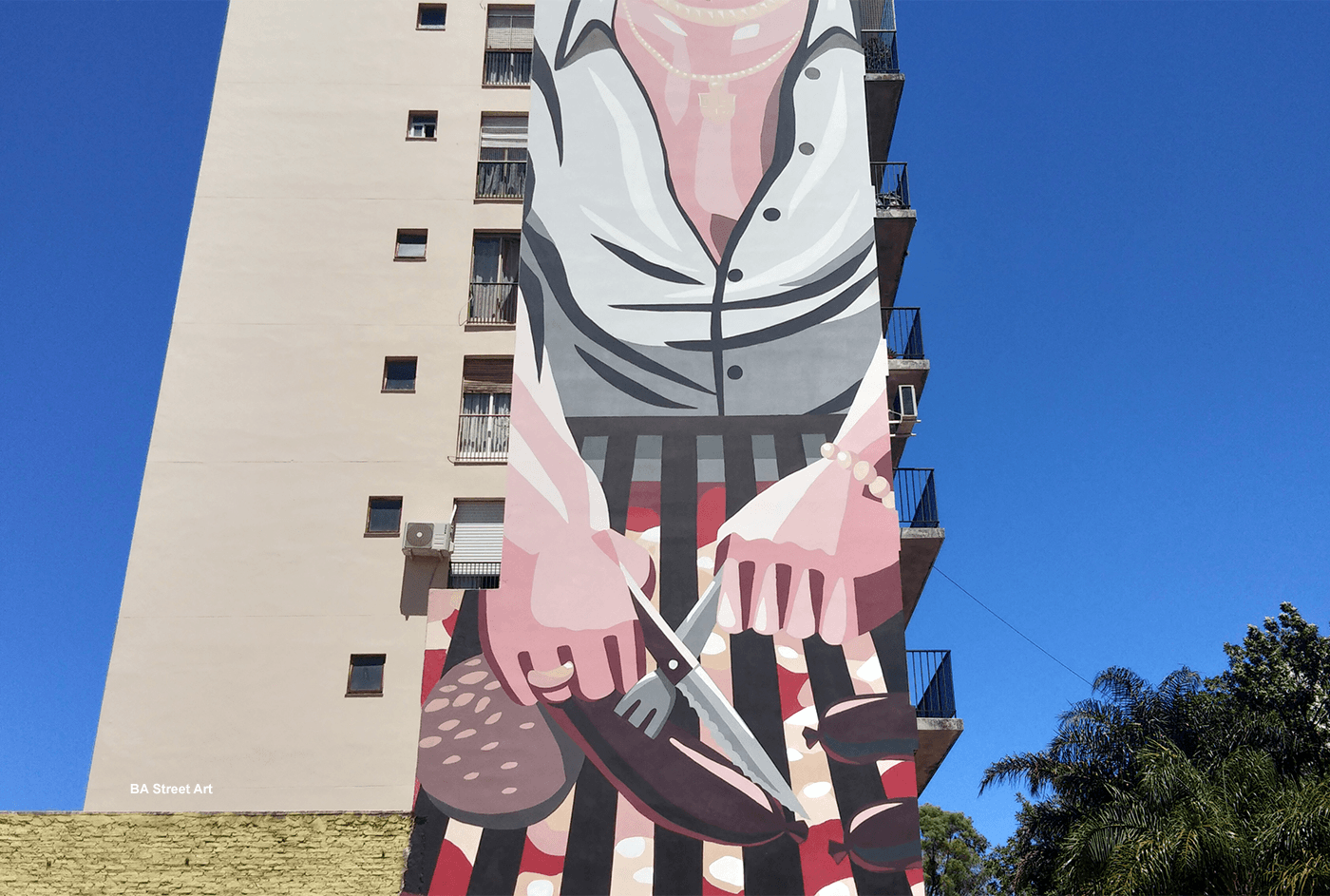
Mural by Franco Fasoli featuring woman cutting a morcilla in La Boca (photo © BA Street Art)
Argentina is also famous for its asados (barbecues) and its parrilla (grill) restaurants serving steaks, ribs and different cuts of beef, as well as black sausage (morcilla), intestines (chinculines) and other parts of the cow.
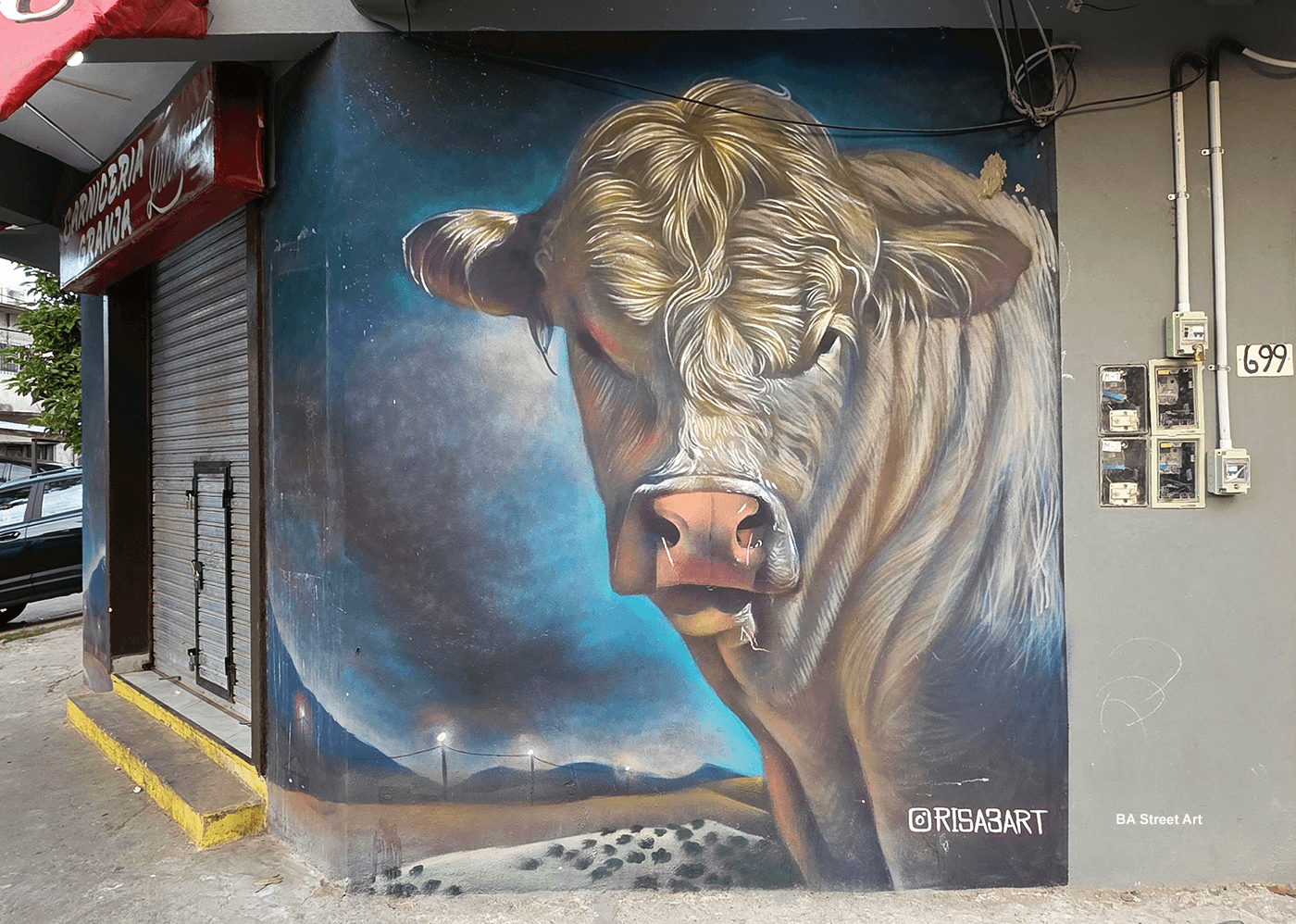
Mural by Risa Art in Avellaneda featuring a Hereford cow (photo © BA Street Art)
Beef in Argentina has traditionally come from grass-fed Angus and Hereford cows (above) reared on the vast, fertile pampas (plains) that were brought to the country in the 1850s. Herefords are selected for their greater carcass volume, shorter ground clearance, and an elongated, barrel-like frame, maximizing meat yield for export.
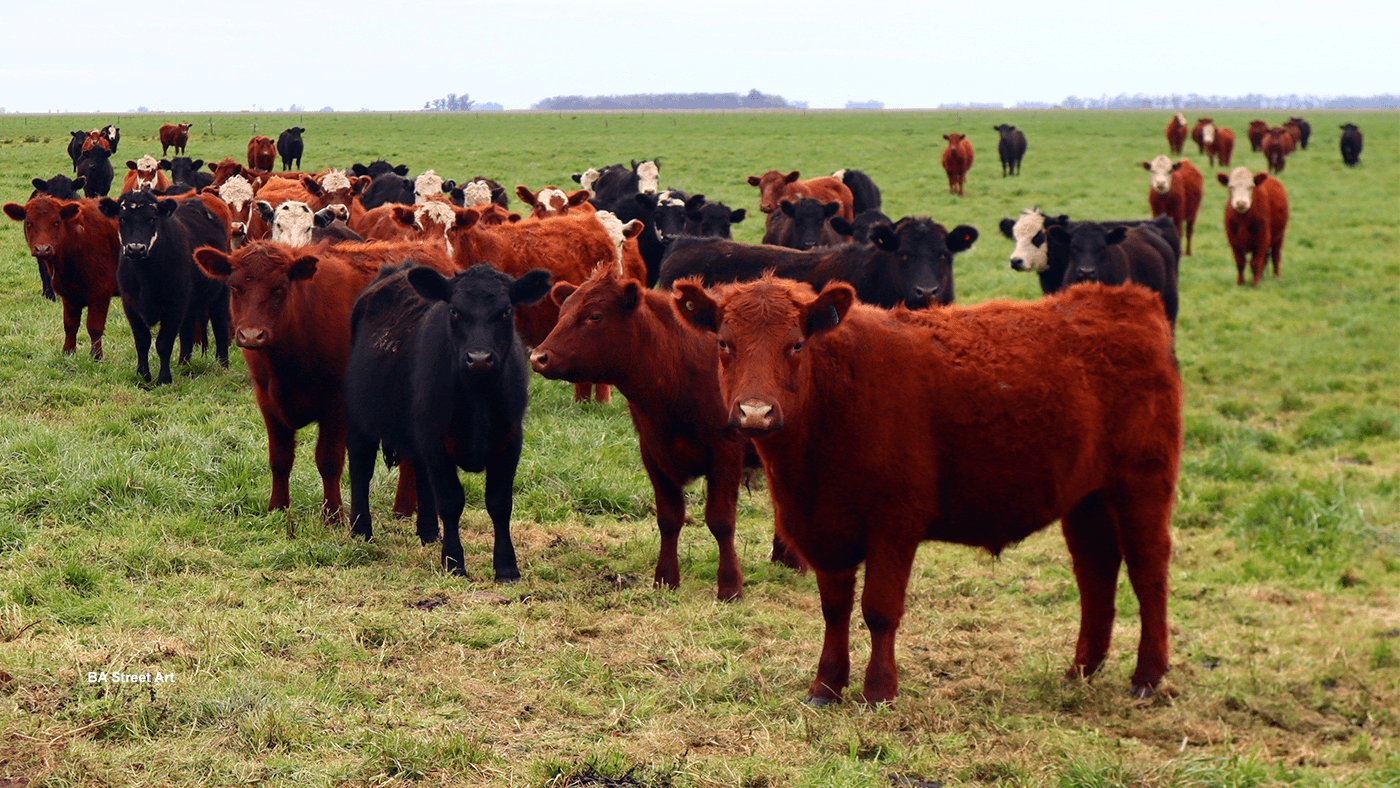
Cows in the pampas in Buenos Aires province (photo © BA Street Art)
In recent years, globalization and modern farming methods have meant many cows that are normally accustomed to graze the pampas are forced to live in confined pens called feedlots for two or three months before they go to the abattoir. During this time the cattle are fed on a grain-based diet with ingredients such as corn and soy designed for rapid and optimal growth that fattens them faster before they are sent to slaughter.
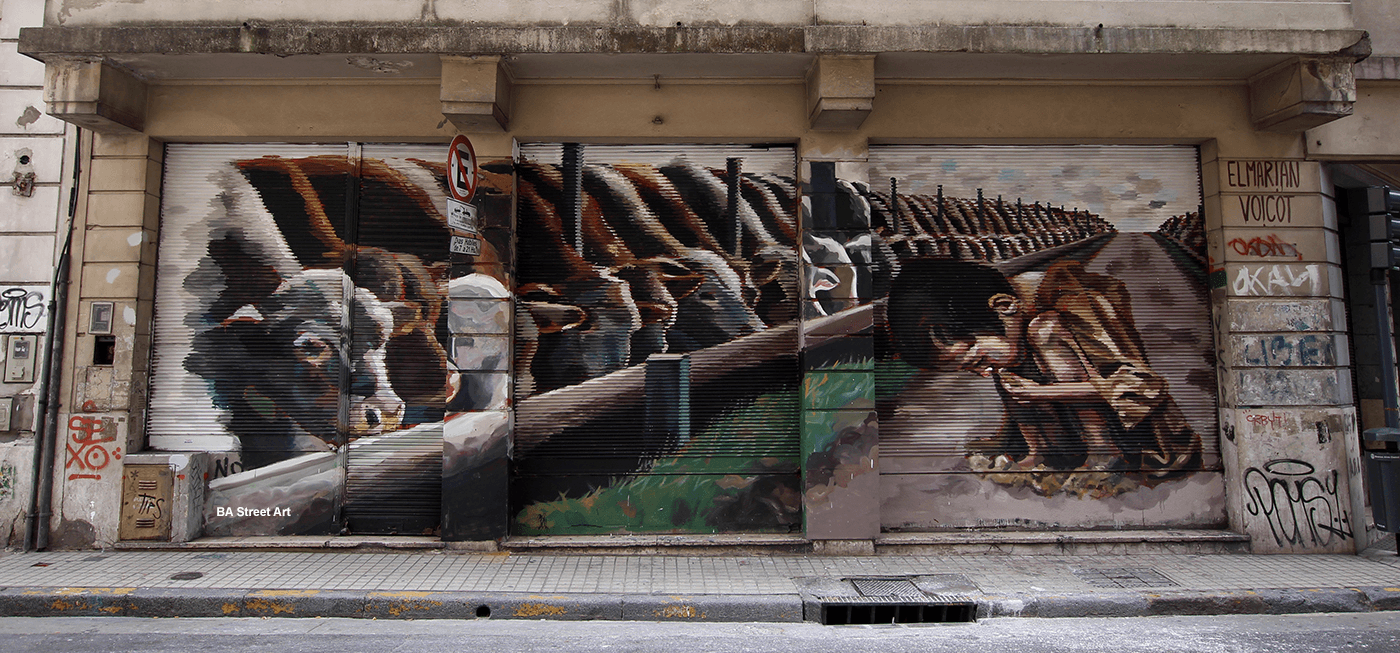
Mural by El Marian sponsored by Voicot featuring feedlots (photo © BA Street Art)
This mural (above) in San Telmo painted by Argentine street artist El Marian was sponsored by animal rights organisation Voicot. It relates to feedlots in Argentina with cows are crammed together in a row eating out of troughs. There are also environmental and health concerns over feedlots with cows often surrounded by their own urine and fecal matter producing foul gases and disgusting smells.
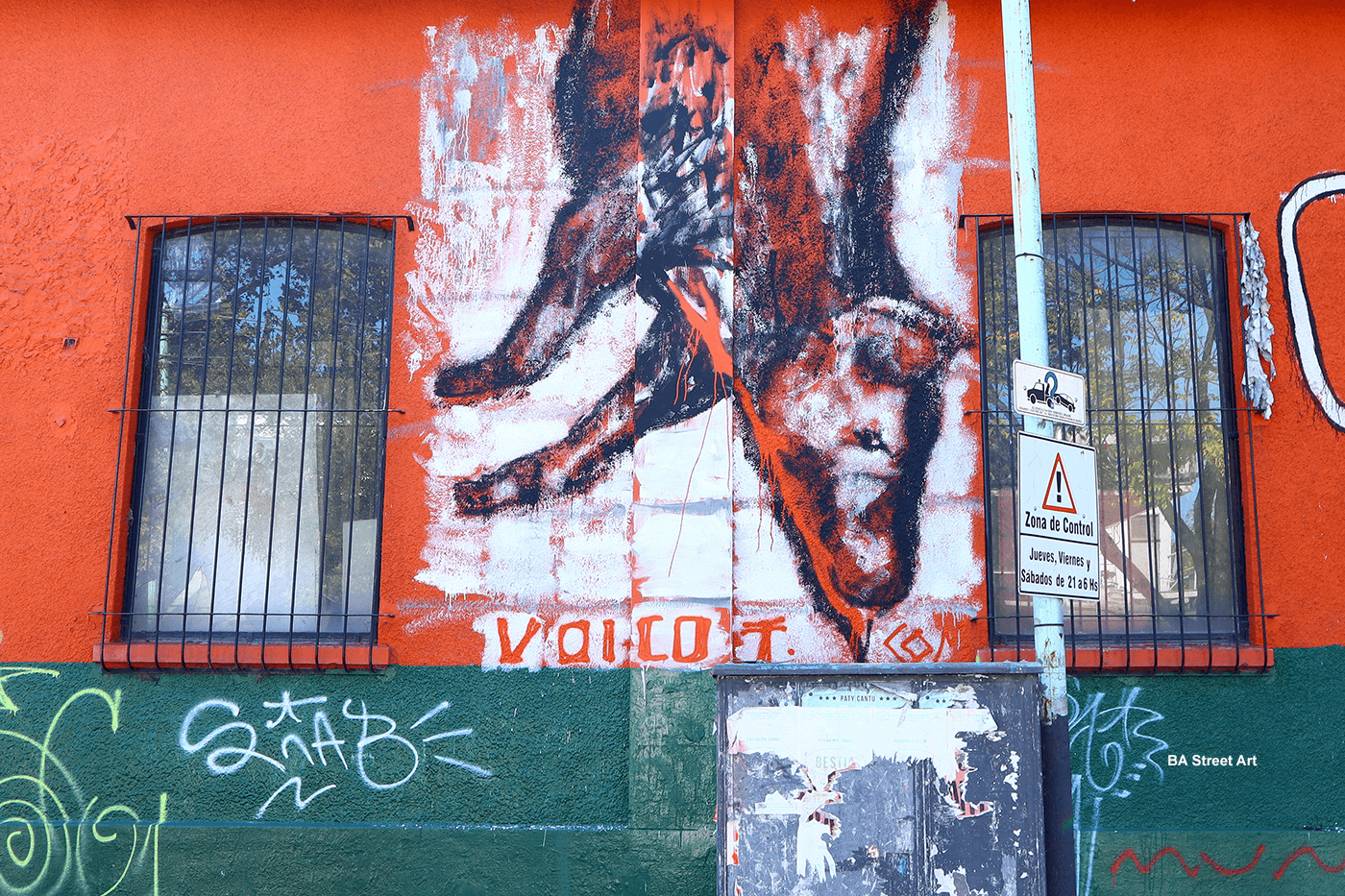
Mural of dead cow in Palermo after slaughter sponsored by Voicot (photo © BA Street Art)
The mural (above) in Palermo features a dead cow after slaughter with dripping blood. The phrase next to it reads: “Que asco” which translates as: “How disgusting”.
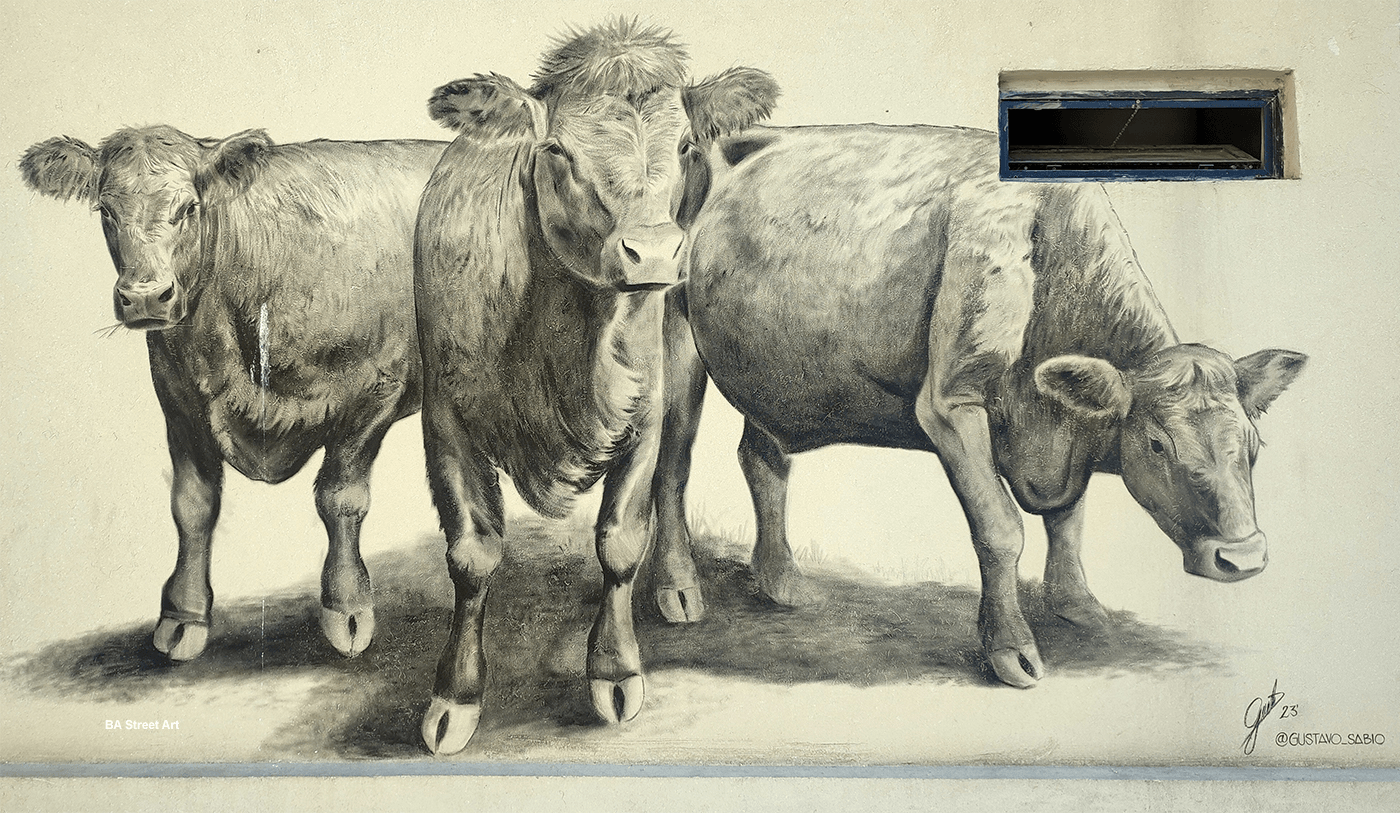
Mural with cows grazing by Gustavo Sabio (photo © BA Street Art)
In recent times, with Genetically Modified (GM) maiz and soy being widely produced in Argentina, this has also led to growing health concerns about eating beef produced from cows that are no longer grass-fed. Beef from cows reared in feedlots is so much the norm that a handful of Michelin star parrilla restaurants and butchers’ shops in Buenos Aires now say that their meat comes from grass-reared cows as a unique selling point.
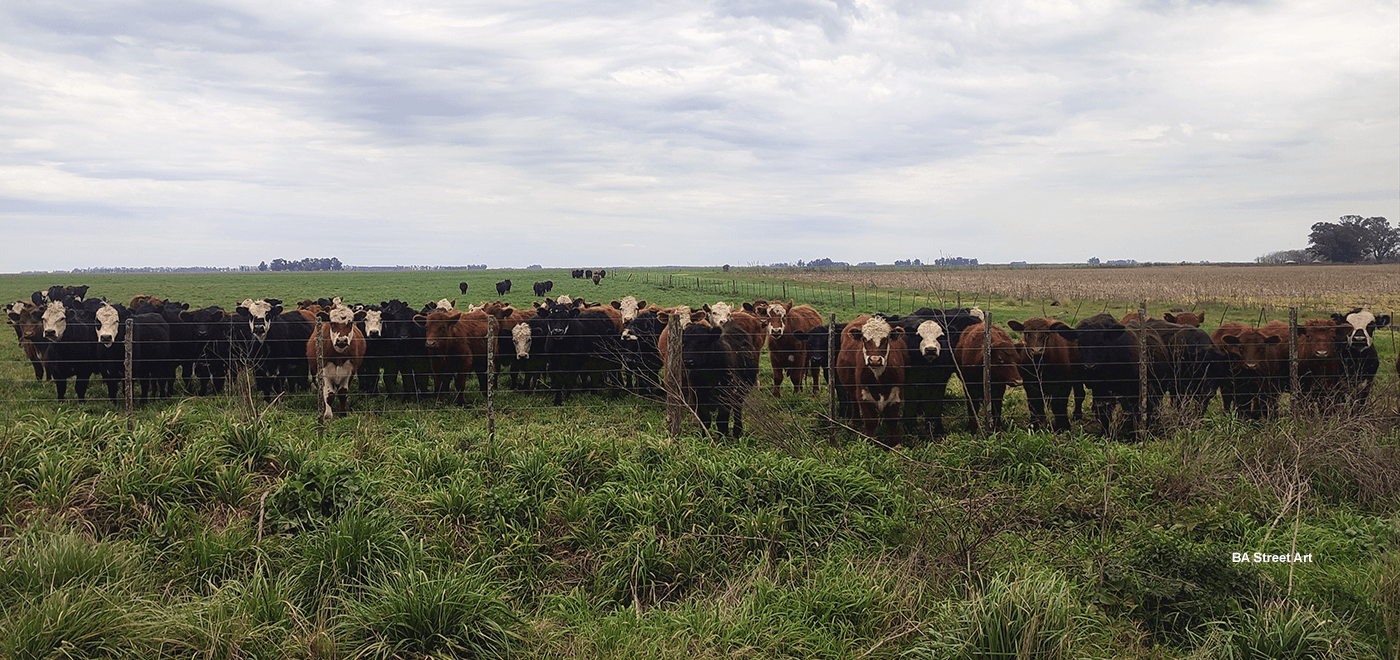
Cows grazing in Buenos Aires province (photo © BA Street Art)
Another concern over beef production is the use of the antibiotic chloramphenicol. Argentina has prohibited chloramphenicol in cattle intended for human consumption since 1995, and it’s also banned in many countries including the USA and European Union. Chinese customs stopped a single 22-tonne container from a processing plant in Argentina in March 2026 due to traces of the chemical. Chloramphenicol residues in meat and milk can cause severe, irreversible and often fatal aplastic anemia in humans and exposure can cause the bone marrow to stop producing new blood cells.
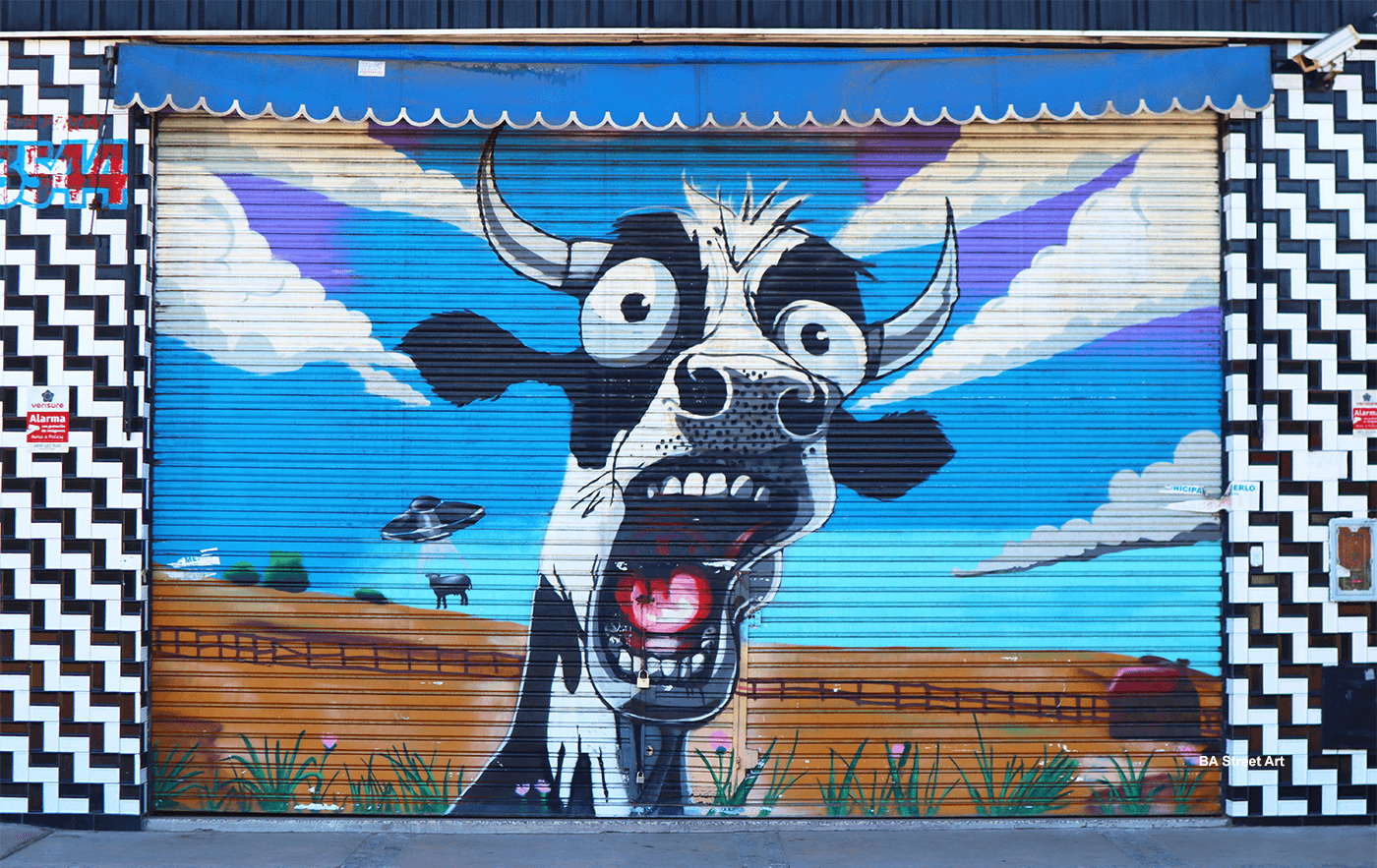
Cartoon cow painted on shutters in Buenos Aires province (photo © BA Street Art)
Murals featuring cows can be found all over Buenos Aires like this one above on the shutters of a local shop. Asados (barbecues) are an important tradition for many families in Argentina with most houses with patios or gardens having a parrilla installed, and families and friends get together at weekends for lunch or dinner eating barbecued meat.
Vegetable is crime
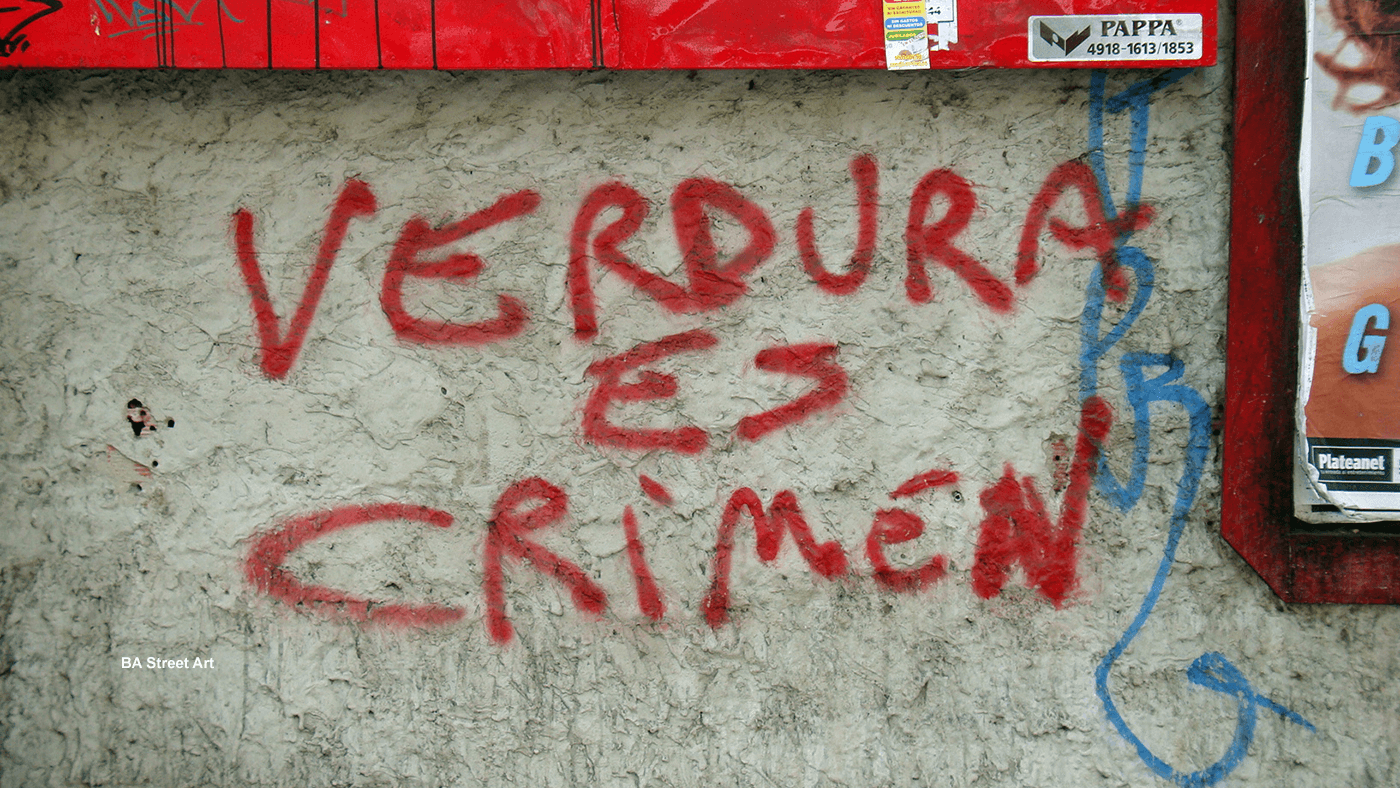
“Vegetable is crime” on a wall in Belgrano, Buenos Aires (photo © BA Street Art)
This message (above) sprayed on a wall in Belgrano, Buenos Aires, reads “Verdura es crimen” or “Vegetable is crime”. Despite more information being available about healthy diets, nutrition, metabolism and the risks of eating too much red meat (and in particular processed meat) being linked to cardiovascular disease, colon cancer and type 2 diabetes; it seems Argentines still can’t get enough beef.
Stencil art
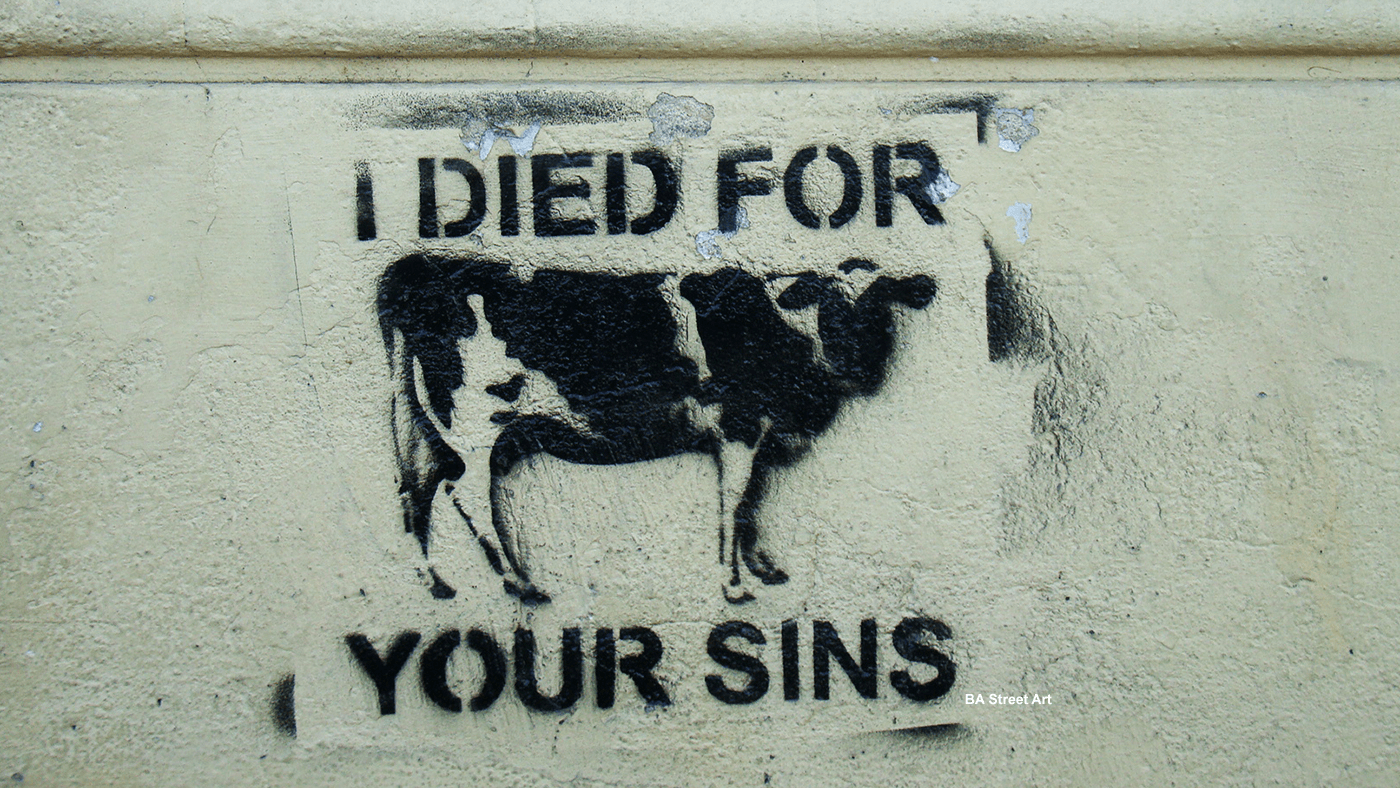
Stencil by Plaza Italia in Palermo (photo © BA Street Art)
Many stencils can be found around Buenos Aires relating to animal cruelty. This one (above) written in English was painted outside Buenos Aires Zoo before it closed in June 2016. It reads: “I died for your sins”. A polar bear at the zoo in Palermo called Winner, died on December 25th 2012 due to heat stroke in with temperatures rising to 45c. Not really the environment or climate you’d think apt for a polar bear. Many citizens and animal rights protestors then campaigned for the former zoo to be closed due to the cruel conditions the animals were kept in. The zoo, renamed Ecoparque Buenos Aires, is now an ecological park focused on education and conservation of native species of birds and animals.
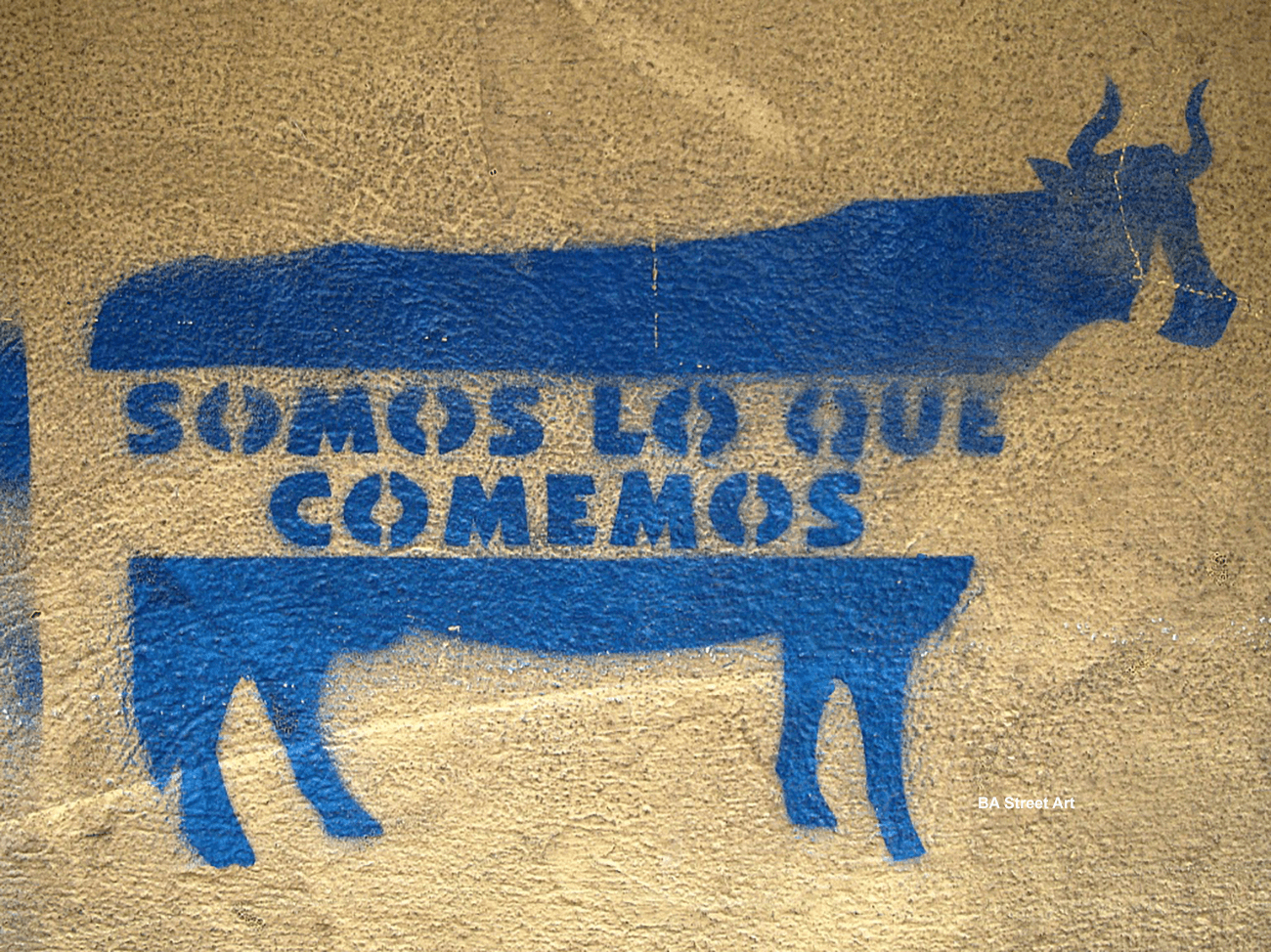
“We are what we eat” stencil (photo © BA Street Art)
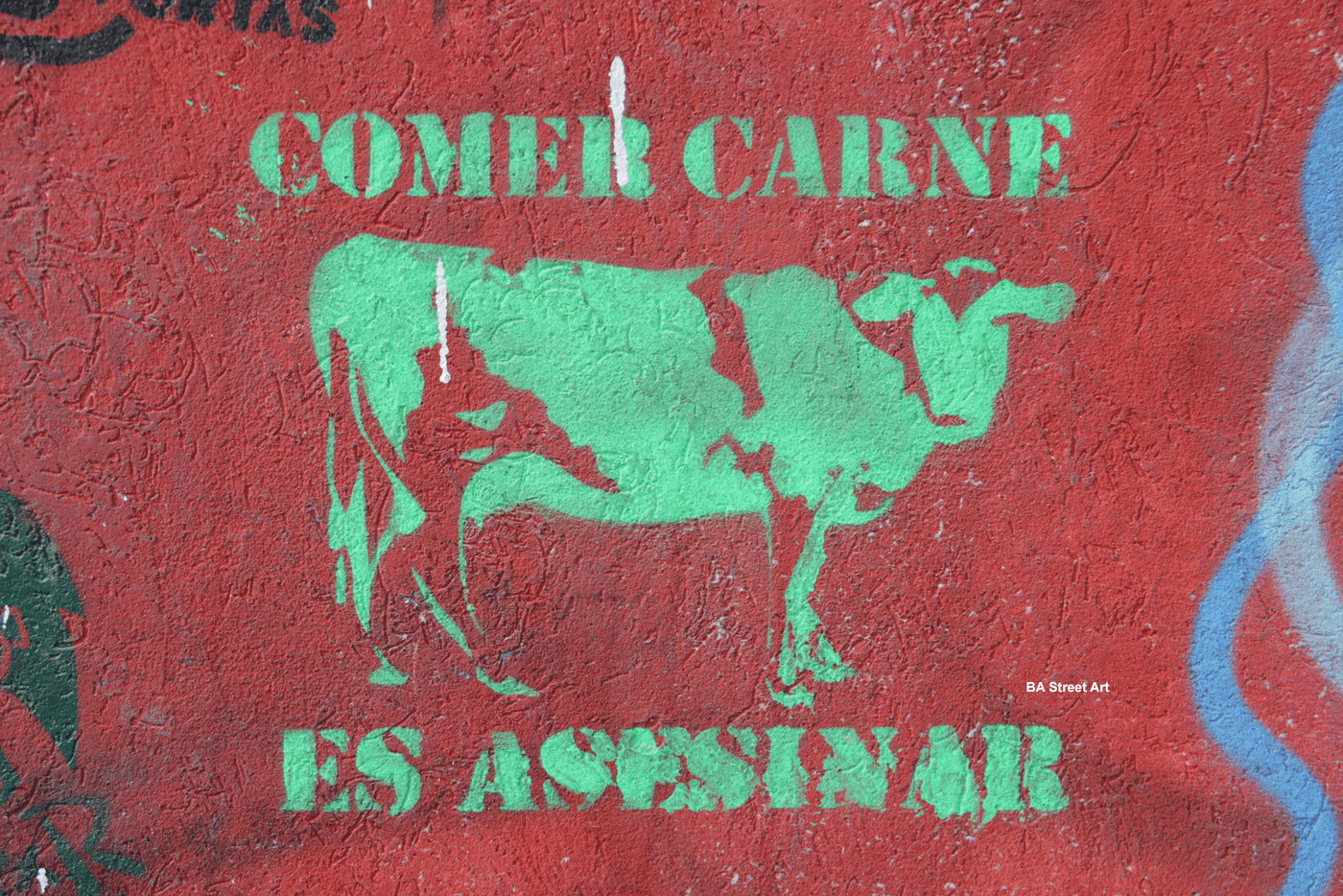
Stencil reading” “Eating meat is murder” (photo © BA Street Art)
This stencil (above) reads: “Comer carne es asesinar” meaning: “Eating meat is murder”. In Hindu religion and Ayurveda, for example, prana or life force relates to the energy that animates living beings. Fresh fruits, vegetables, sprouting and legumbres are considered high in prana because they are close to their natural state.
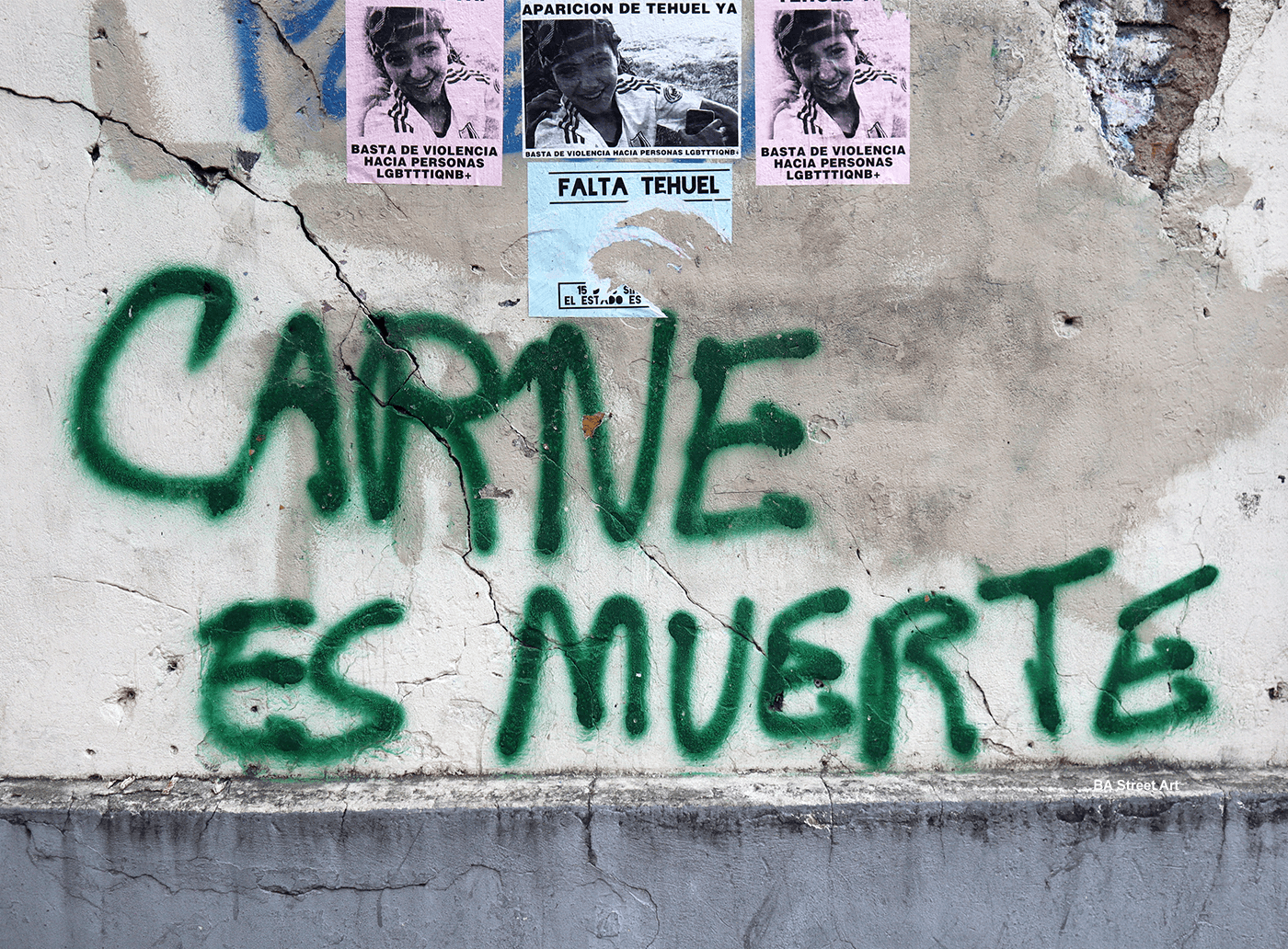
“Meat is death” message (photo © BA Street Art)
This message (above) on a wall in Villa Crespo reads: “Carne es muerte” or in English: “Meat is murder”. Meat is often viewed as having low prana because it comes from an animal that is dead. As more time passes after its slaughter, it’s thought to lose more and more vitality.
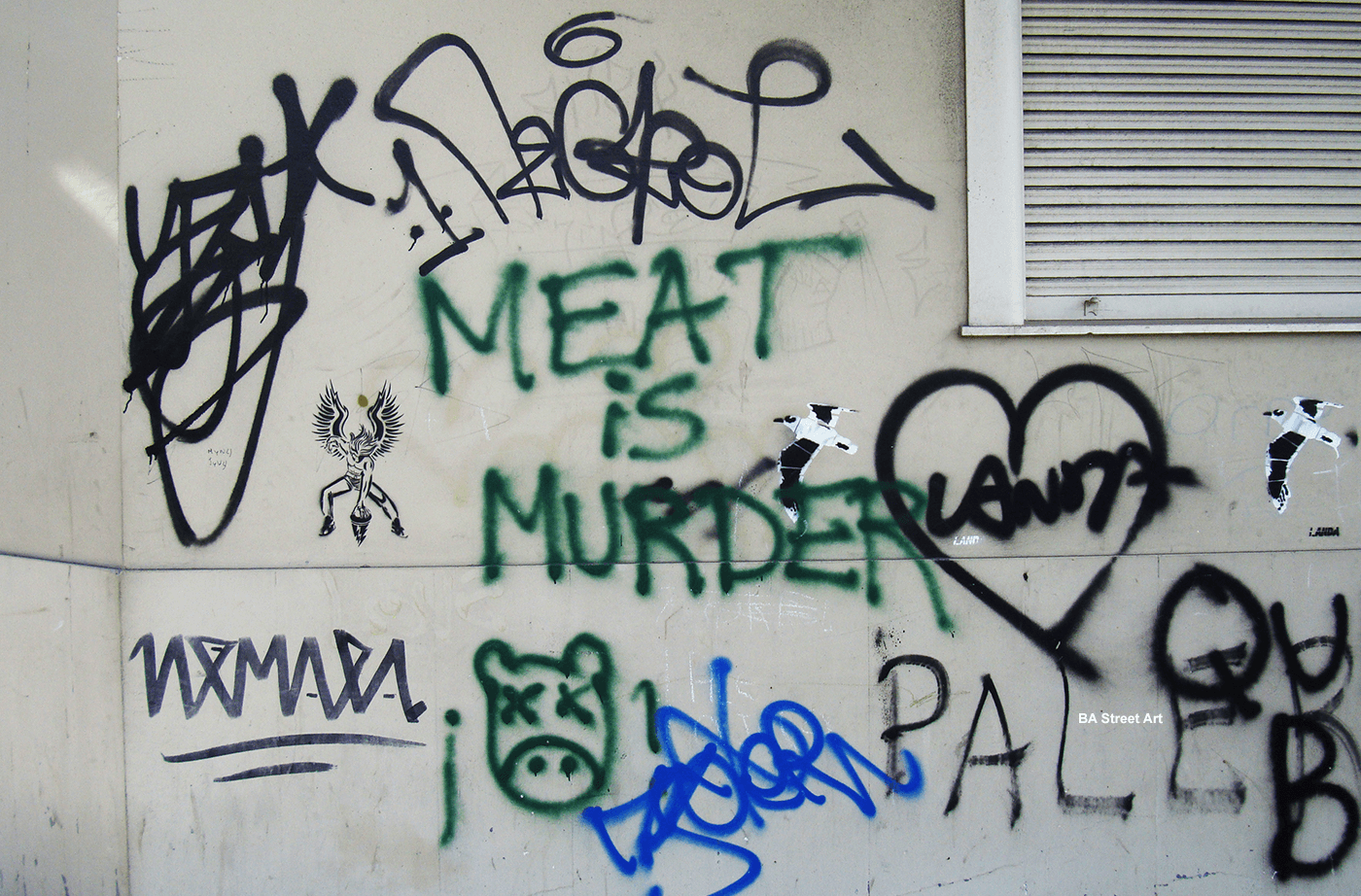
Meat is Murder (photo © BA Street Art)
Another phrase in English sprayed on this wall in Palermo with green paint reads: “Meat is Murder” with the outline of a cow.
Milk murals
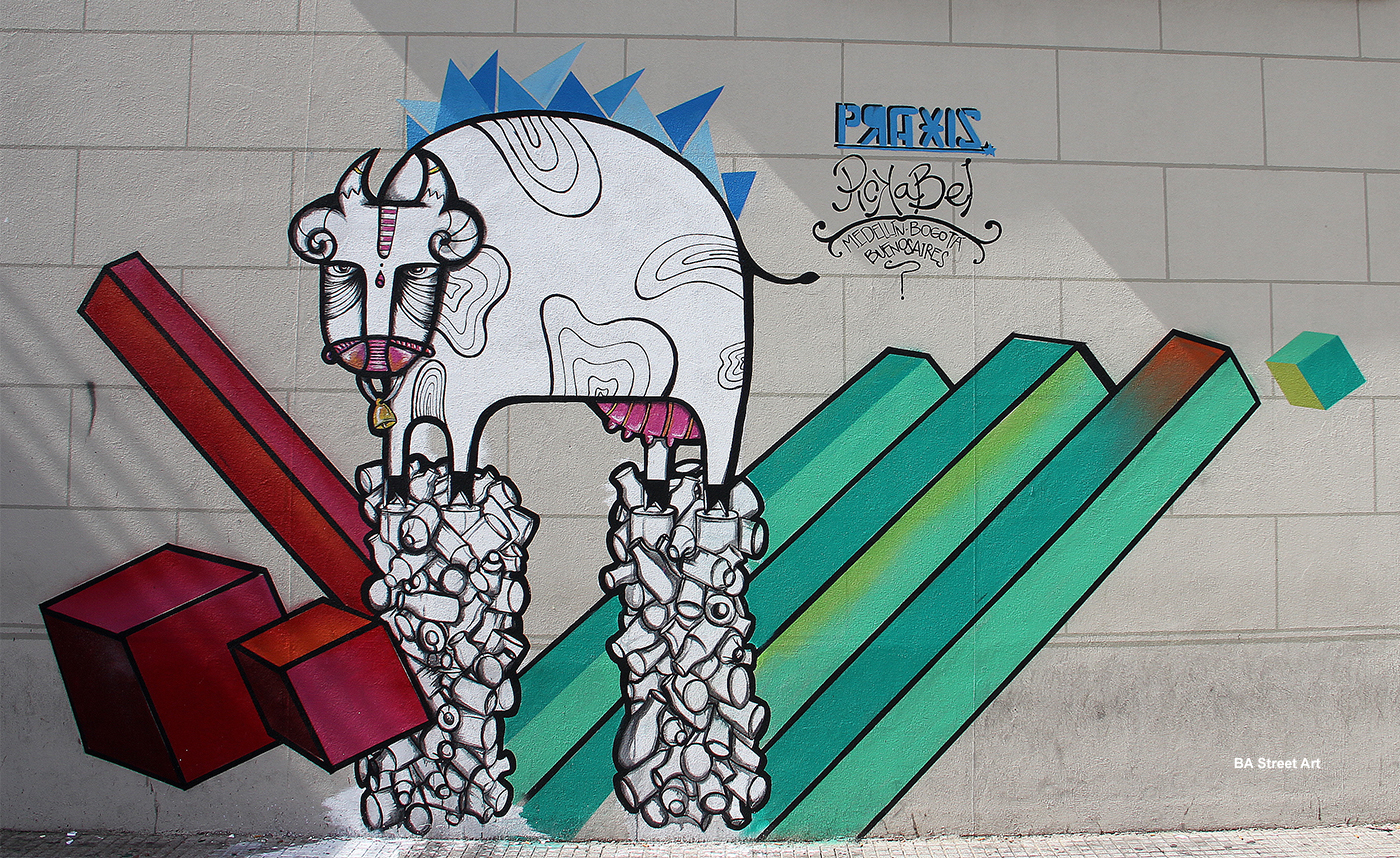
Mural in Palermo by Pickabel & Praxis relating to dairy farming (photo © BA Street Art)
The production of milk from cows with use of antibiotics and synthetic growth hormones like recombinant bovine somatotropin (rBST) to increase yield is a topic that has also provoked health concerns for years relating to allergic reactions in humans. The debate has centred on its indiscriminate and difficult-to-regulate use, but above all on its impact on animal welfare and the health of the treated animals. There have been several attempts to authorize its use in Argentina. This mural (above) by artists Pickabel and Praxis (above) features a cow standing on milk bottles relate to intensive dairy farming that is common in Buenos Aires province.
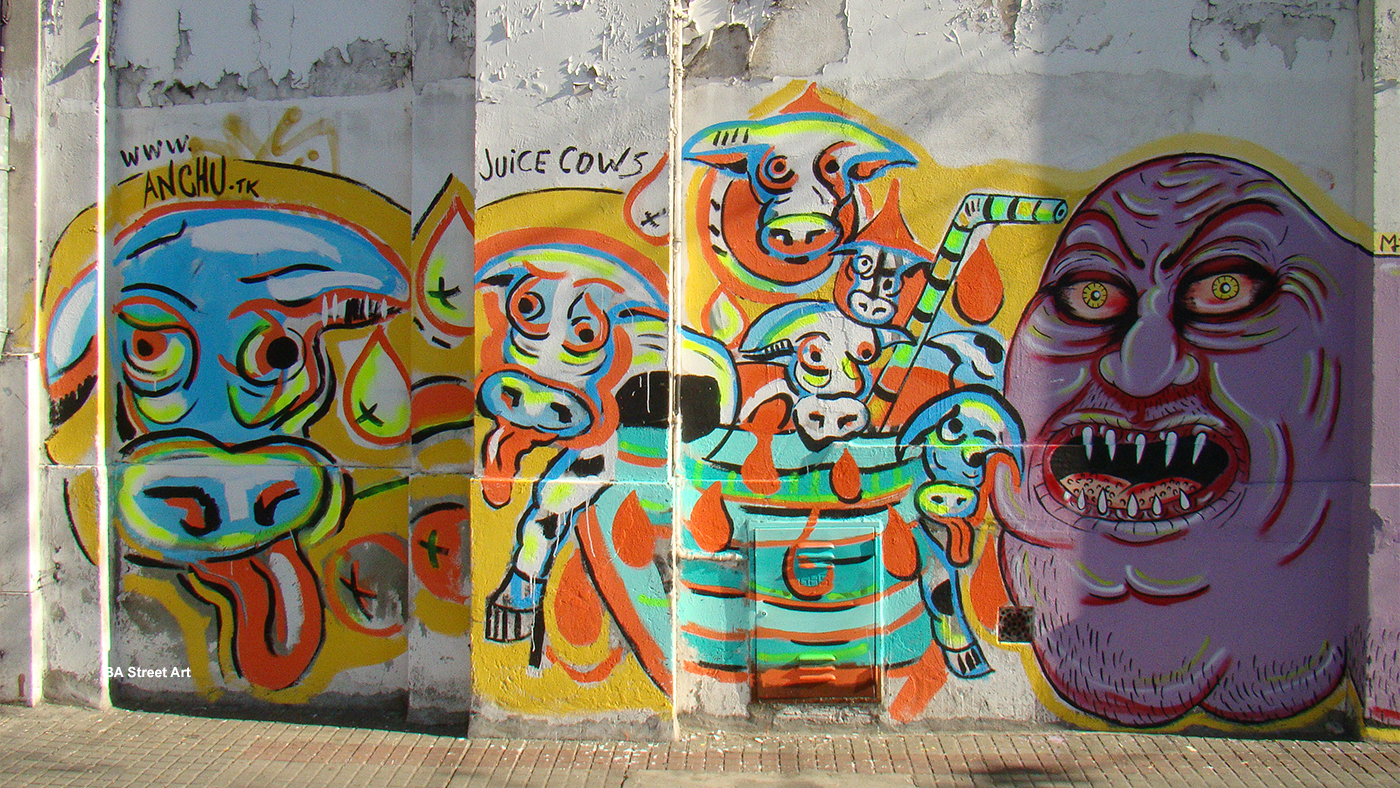
Juice cows mural by Anchu & Mondo Lila in Villa Crespo (photo © BA Street Art)
In March 2026, National Service for Agri-Food Health and Quality (SENASA) in Argentina confirmed that it has banned the use and sale nationwide of veterinary products containing recombinant rBST, the hormone administered to cattle to increase milk production. This mural (above) by street artists Anchu and Mondo Lila is entitled “Juice Cows” and relates to dairy farming and animal cruelty in Argentina. It features a monster ready to suck up the contents of a bucket full of calves with a straw.
Pork protests
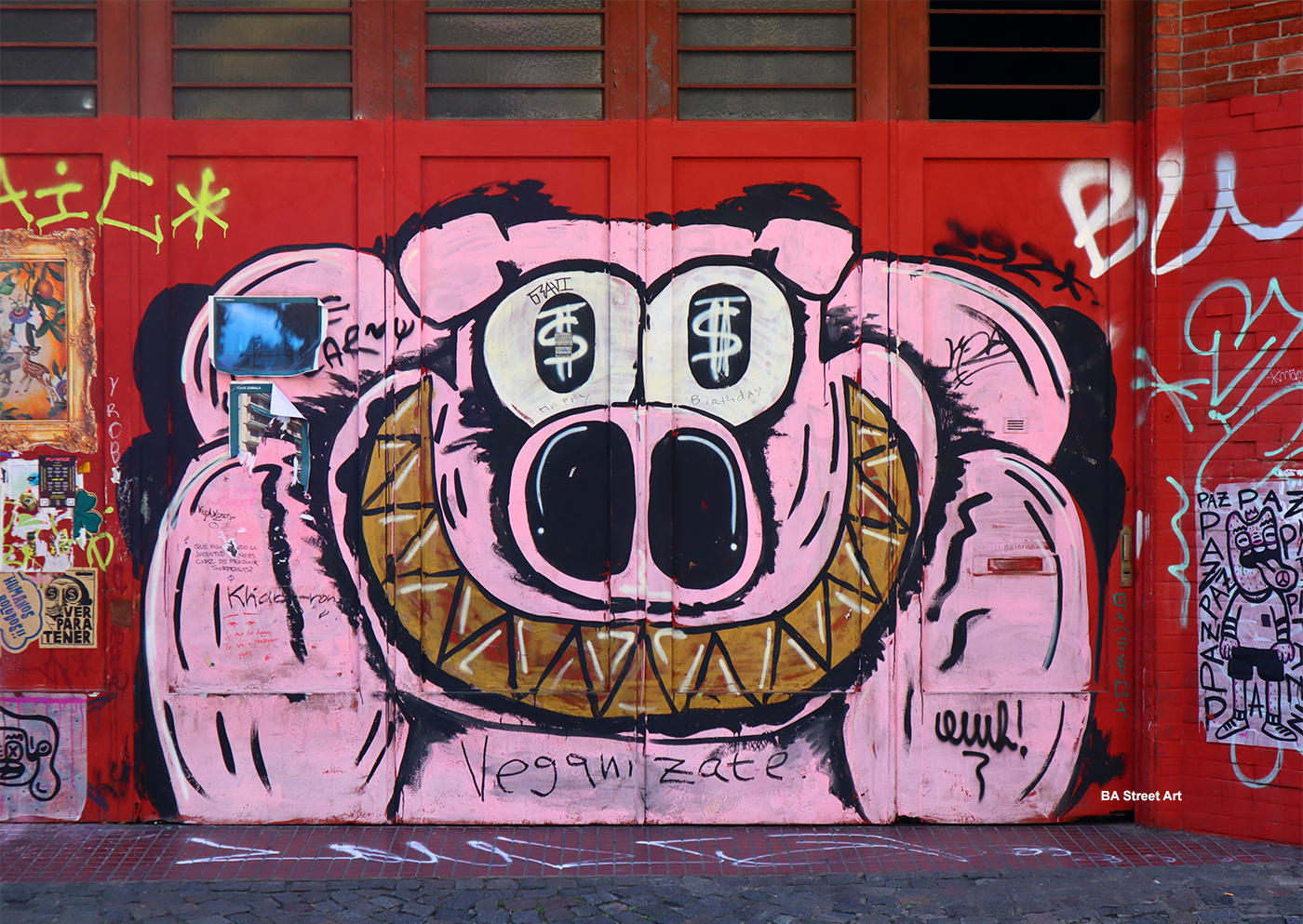
Pig protest – mural in San Telmo with the message “Veganize yourself” (photo © BA Street Art)
Animal rights protesters in Argentina are also concerned about pig production due to intensive farming methods that can cause significant suffering to intelligent and social animals. Activists criticise the use of gestation and farrowing crates, where breeding females may spend extended periods in overcrowded and confined spaces that severely restrict their movement. They argue this prevents normal behaviours such as turning around, nest-building, and social interaction.
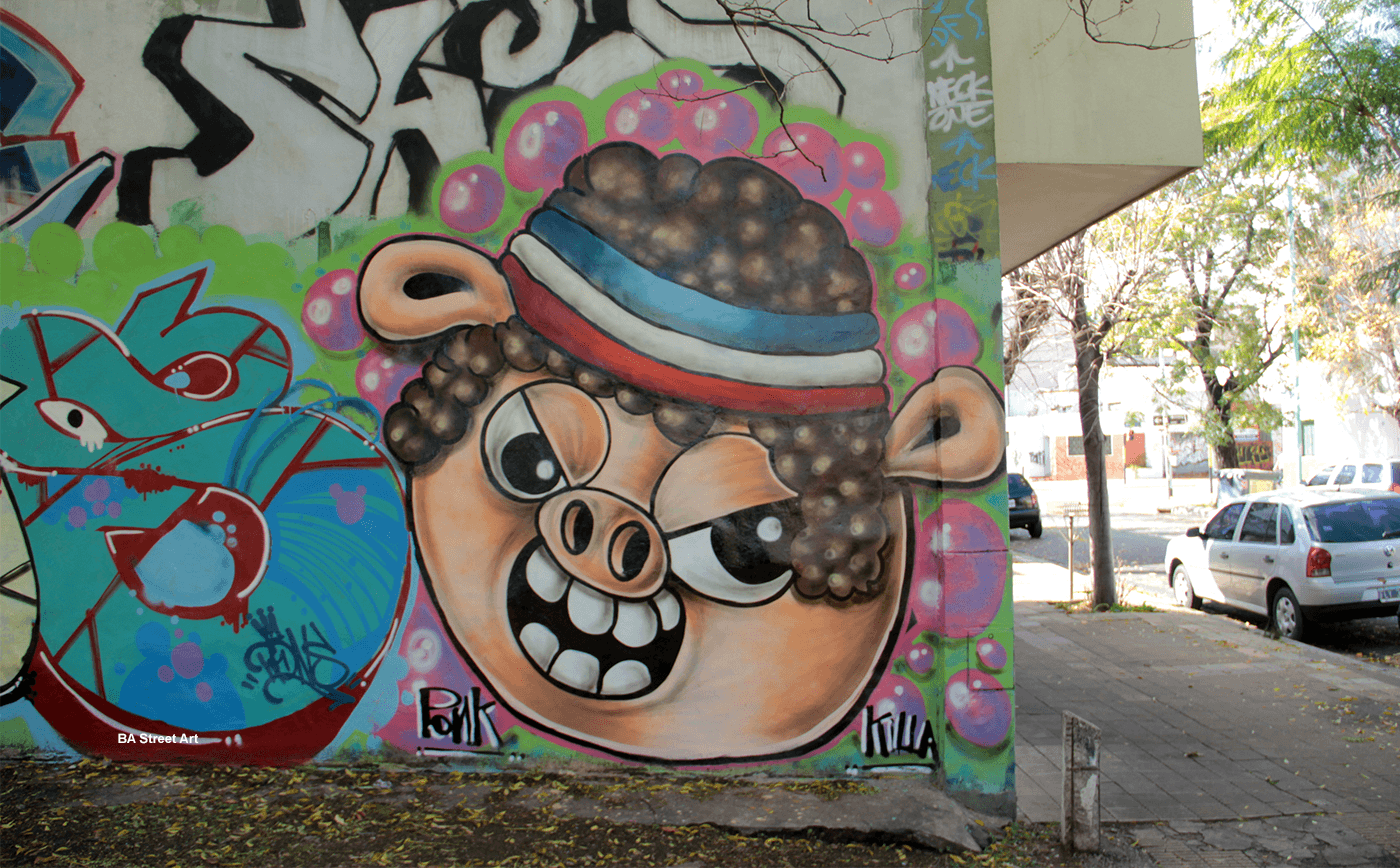
Pig graffiti in Buenos Aires with the message ‘Pork Killa (photo © BA Street Art)
Many Argentine activists object not only to practices such as tail docking, teeth clipping, and castration of piglets without anesthesia or pain relief at some facilities but also living conditions and how pigs are transported to slaughter and killed for food. Around 2020, proposals to expand pork production with Chinese investment sparked nationwide protests in Argentina. Some critics argued that concentrating large numbers of animals can increase the risk of infectious disease outbreaks. There are also dietary concerns over eating pork, with pigs being described as “dirty” animals that don’t have pores making it difficult for them to sweat out of secrete toxins.
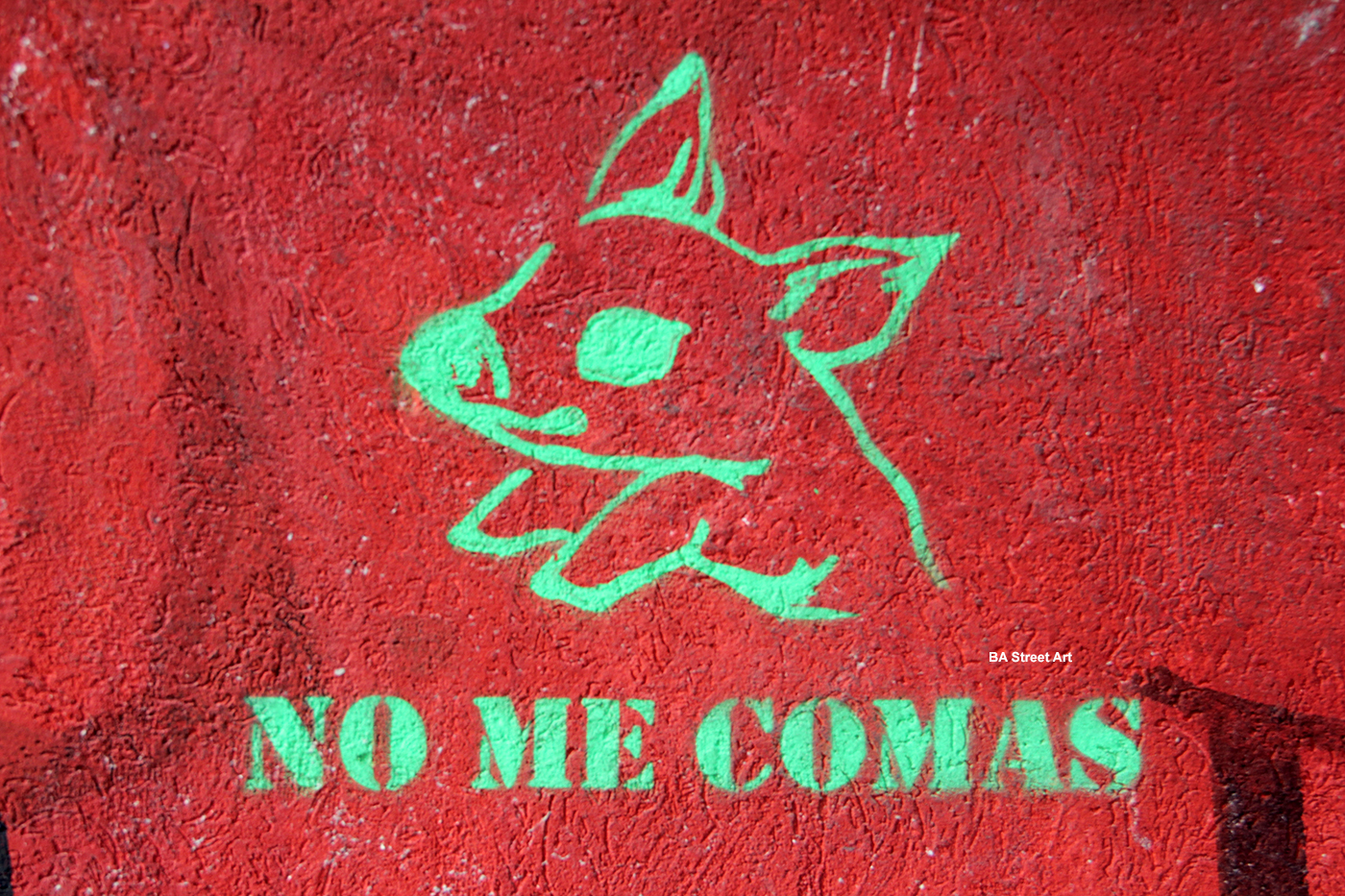
Piglet stencil saying: “Don’t eat me” (photo © BA Street Art)
Meanwhile, pork consumption in Argentina per capita pork has increased to 18.kg per person annually by the end of 2025, marking an 8.4% year-on-year increase compared to the 17.4 kilograms recorded the previous year. The rise is thought to be related to more people consuming pork due to the higher cost of beef in butchers’ shops and markets. Exports of pork from Argentina also continue to grow with exports rising by 161% in the first four months of 2026 compared to the same period the previous year, according to National Secretariat of Agriculture, Livestock, and Fisheries (SAGyP) reaching US$6m.
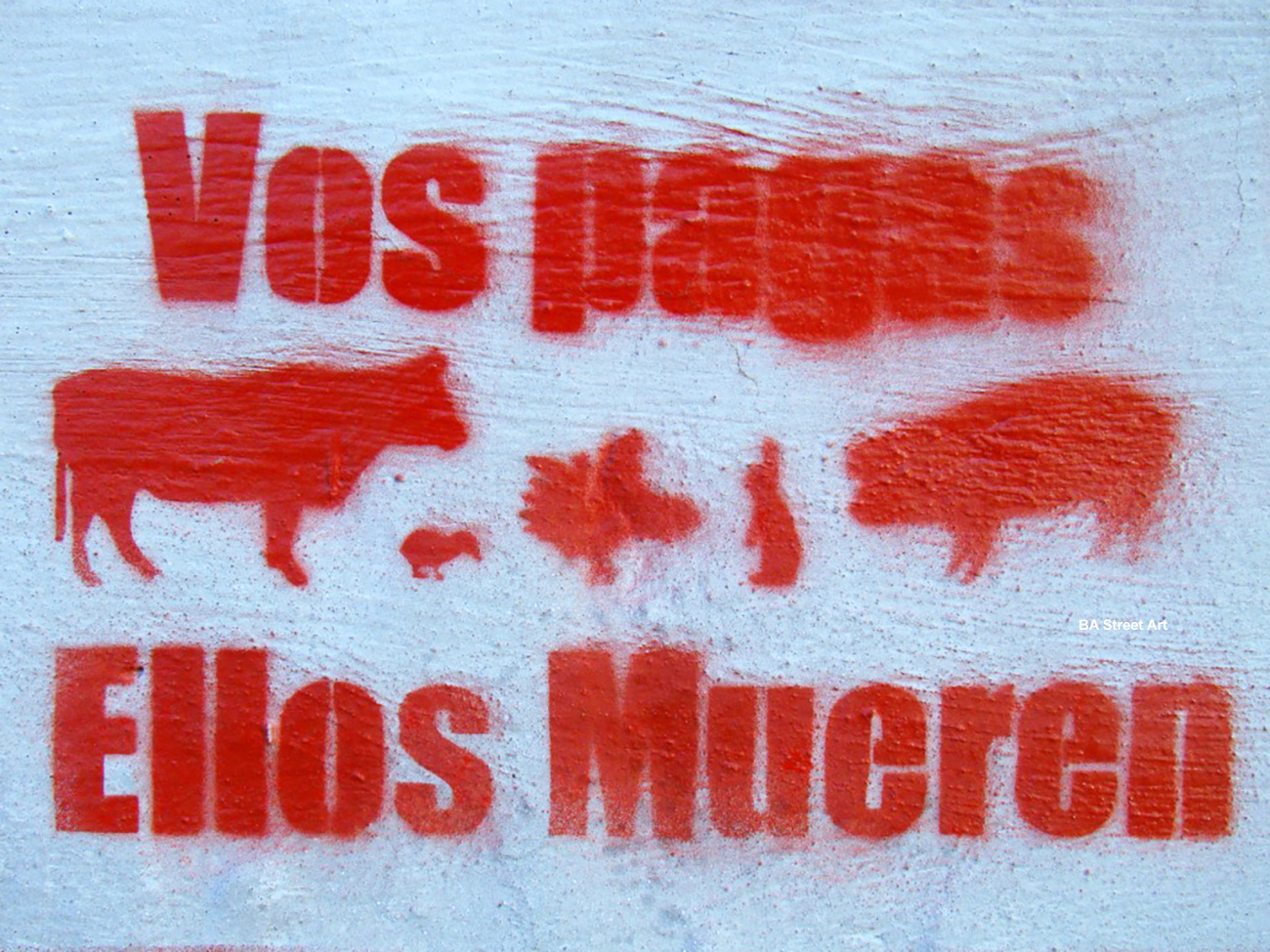
Stencil in Puerto Madero reading: “You pay, they die” (photo © BA Street Art)
This animal rights stencil above in Puerto Madero reads: “Vos pagas, ellos Mueren” which means: “You pay, They Die”, featuring images of a bird, chicken, cow, pig and rabbit.
Veggie street art
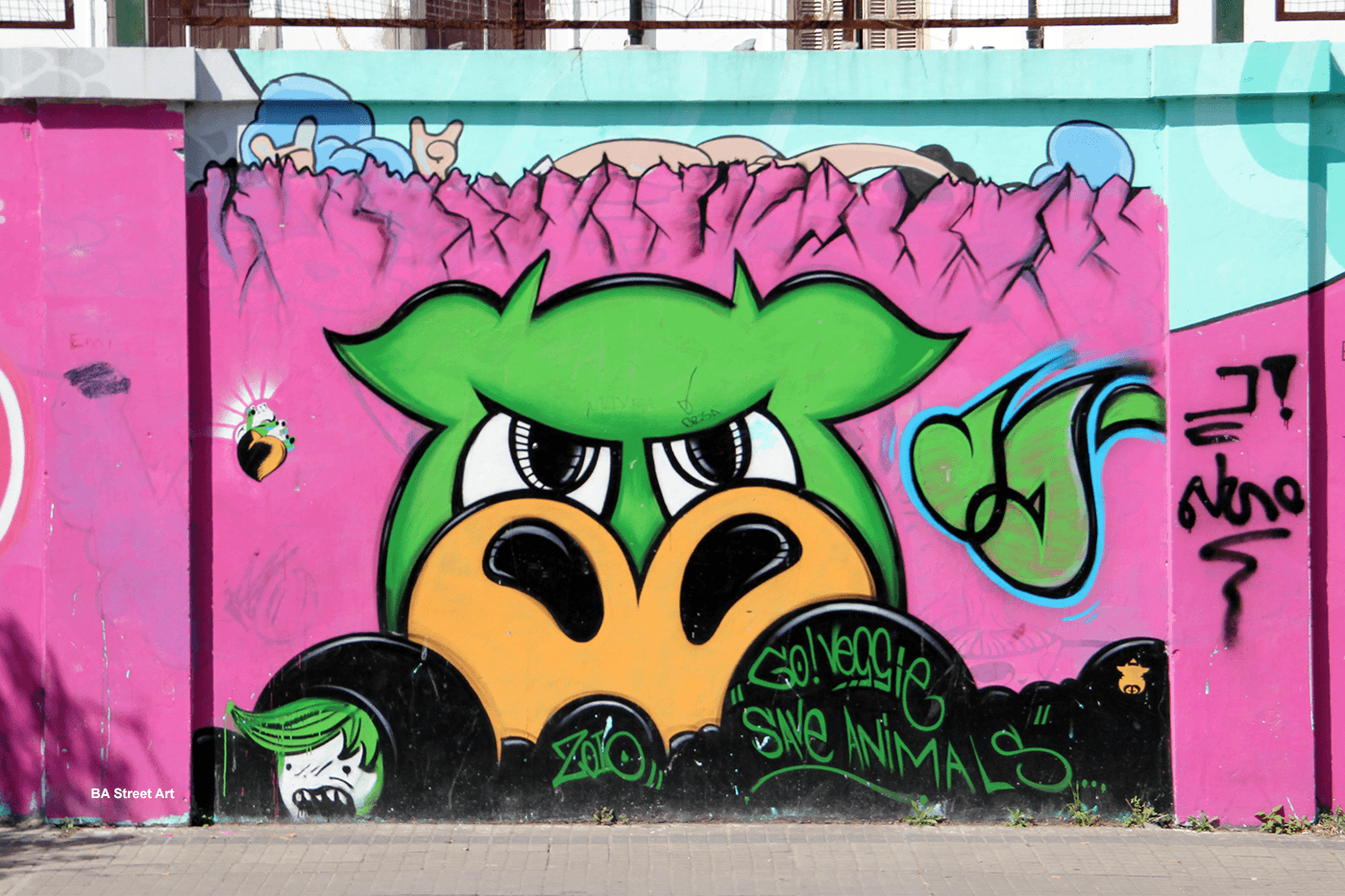
Go veggie artwork in Caballito (photo © BA Street Art)
As well as street art promoting awareness about animal cruelty, beef, pork and dairy production, you can also find many artworks on the walls of Buenos Aires City featuring vegetables or encouraging people to go vegan or veggie. This aerosol artwork (above) next to Parque Rivadavia in Caballito features a cartoon cow with the message: “Go veggie. Save animals.”
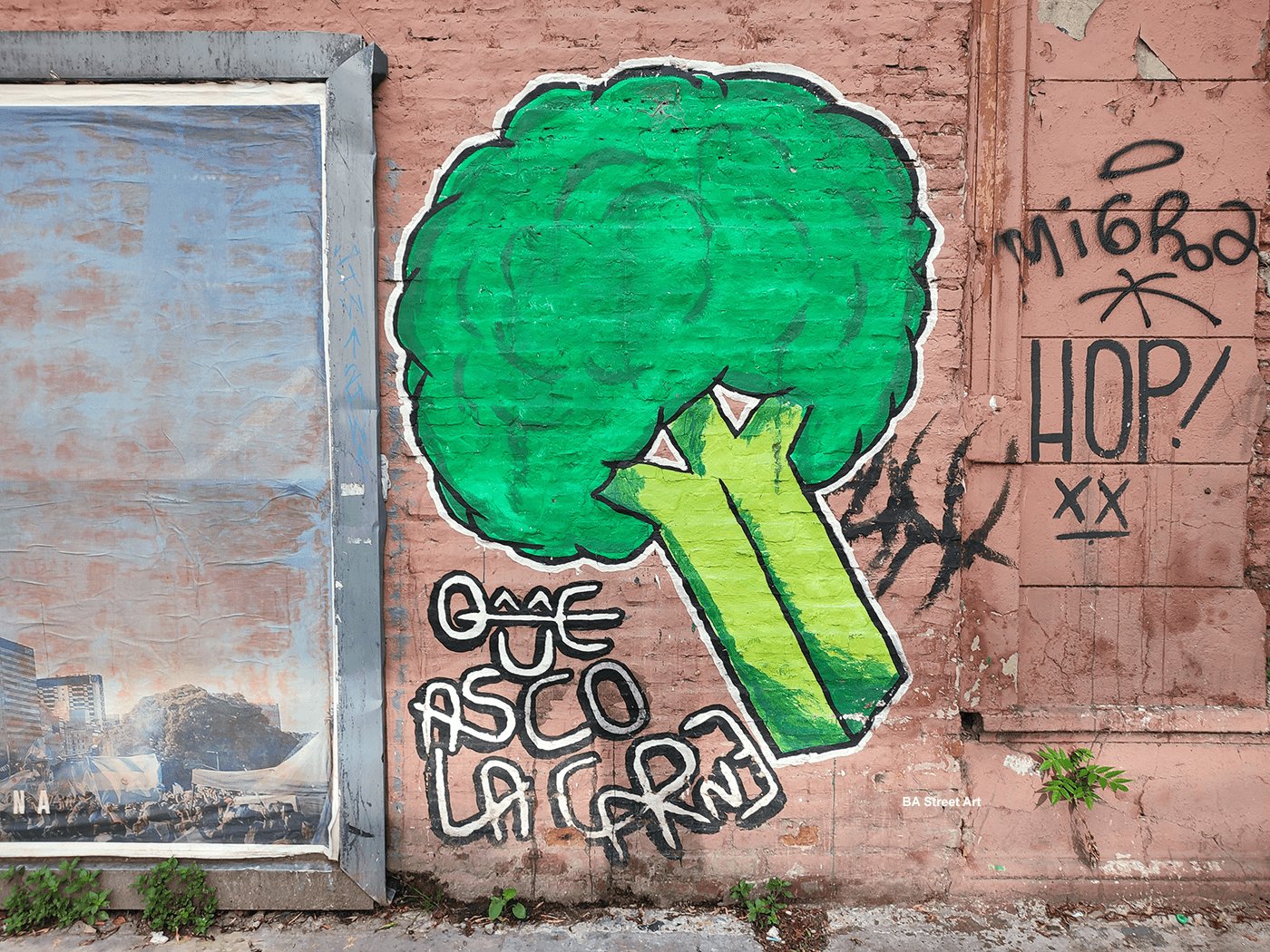
Broccoli artwork (photo © BA Street Art)
This artwork (above) in Villa Urquiza features a head of broccoli accompanied by the phrase: “Que asco la carne” taking the form of a vegan protest. Broccoli is regarded as one of the healthiest vegetables as it’s packed with vitamins K, A, and C and antioxidants like sulforaphane. Regular consumption is regarded to support the immune system and help promote strong bones and reduce inflammation.
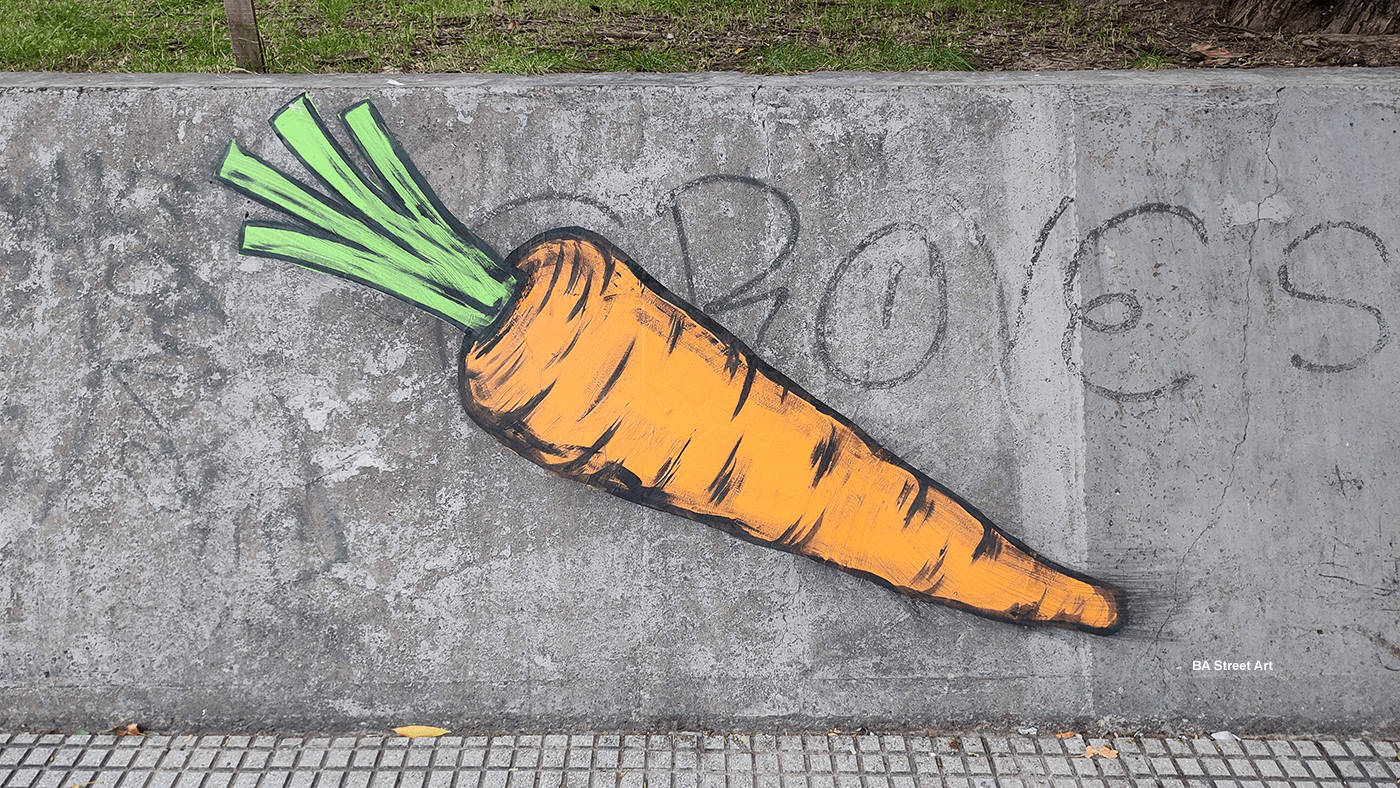
Carrot artwork in Palermo (photo © BA Street Art)
This carrot artwork (above) on a wall near Parque Las Heras in Palermo appears to relate to vegetarianism or veganism encouraging people to eat vegetables rather than meat or animal products. Carrots are full of essential vitamins, fibre, and antioxidants (including beta-carotene, which the body converts into vitamin A). Regular consumption is supposed to support eye health, strengthen the immune system digestion and heart health. Freshly squeezed carrot juice is also recommended in the treatment of cancer under Gerson Therapy (developed by Max Gerson) accompanied with a strict organic vegetarian diet, nutritional supplements and enemas.
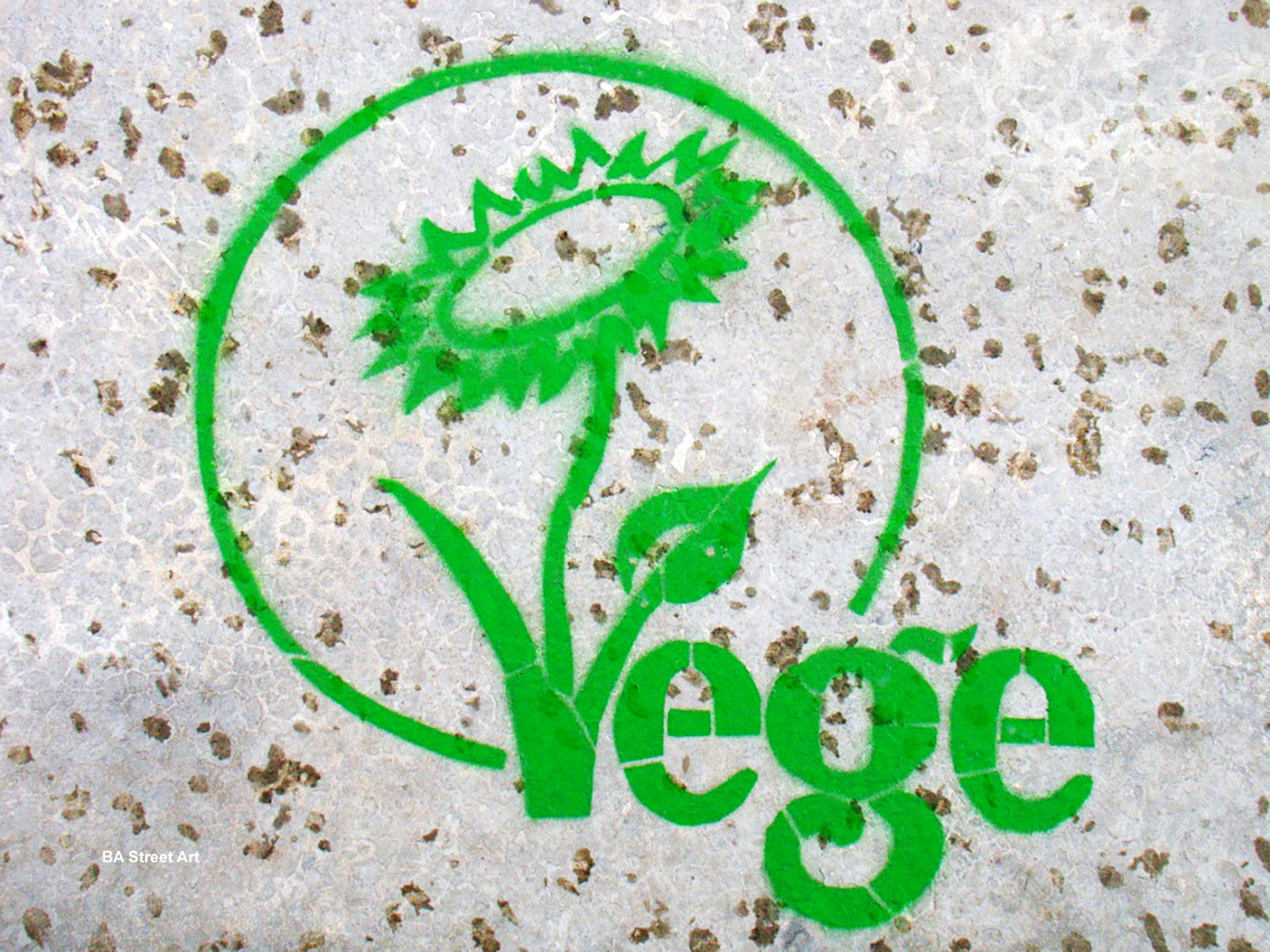
Vege stencil in Colegiales (photo © BA Street Art)
This ‘Vege’ stencil (above) in Colegiales relates to an increasing pro-vegetarian movement in Buenos Aires. In the last decade, more vegetarian and vegan restaurants have opened in the Argentine capital and there are more veggie options available than just a mixed salad. Many women in Argentina, in particular, seem to be more health conscious about the risks of eating too much red meat.
All photos © Buenos Aires Street Art