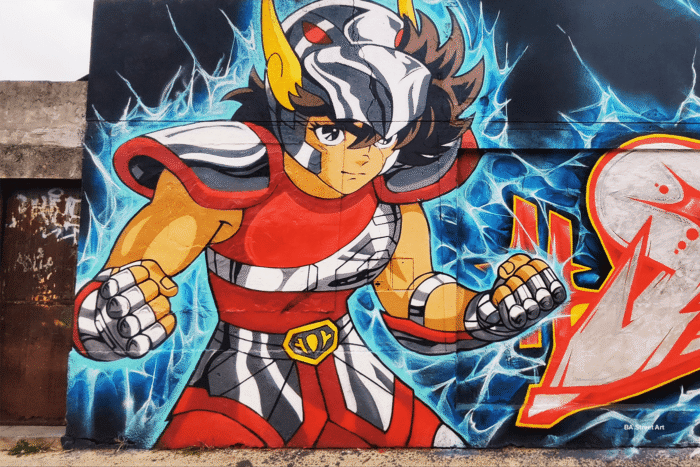
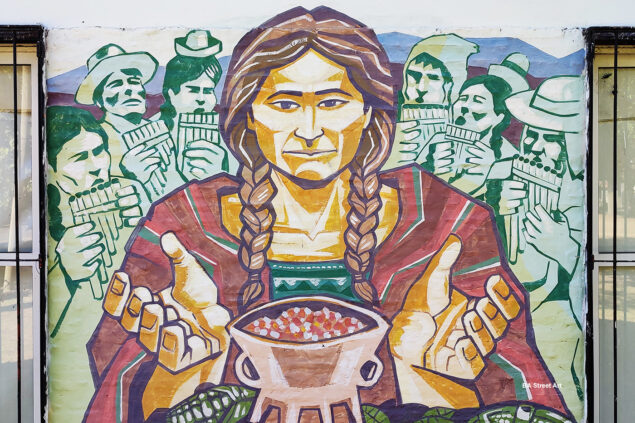
Pachamama is the Inca goddess of nature and on 1st August in Argentina and throughout South America, we celebrate Pachamama Day. Photos by Buenos Aires Street Art.
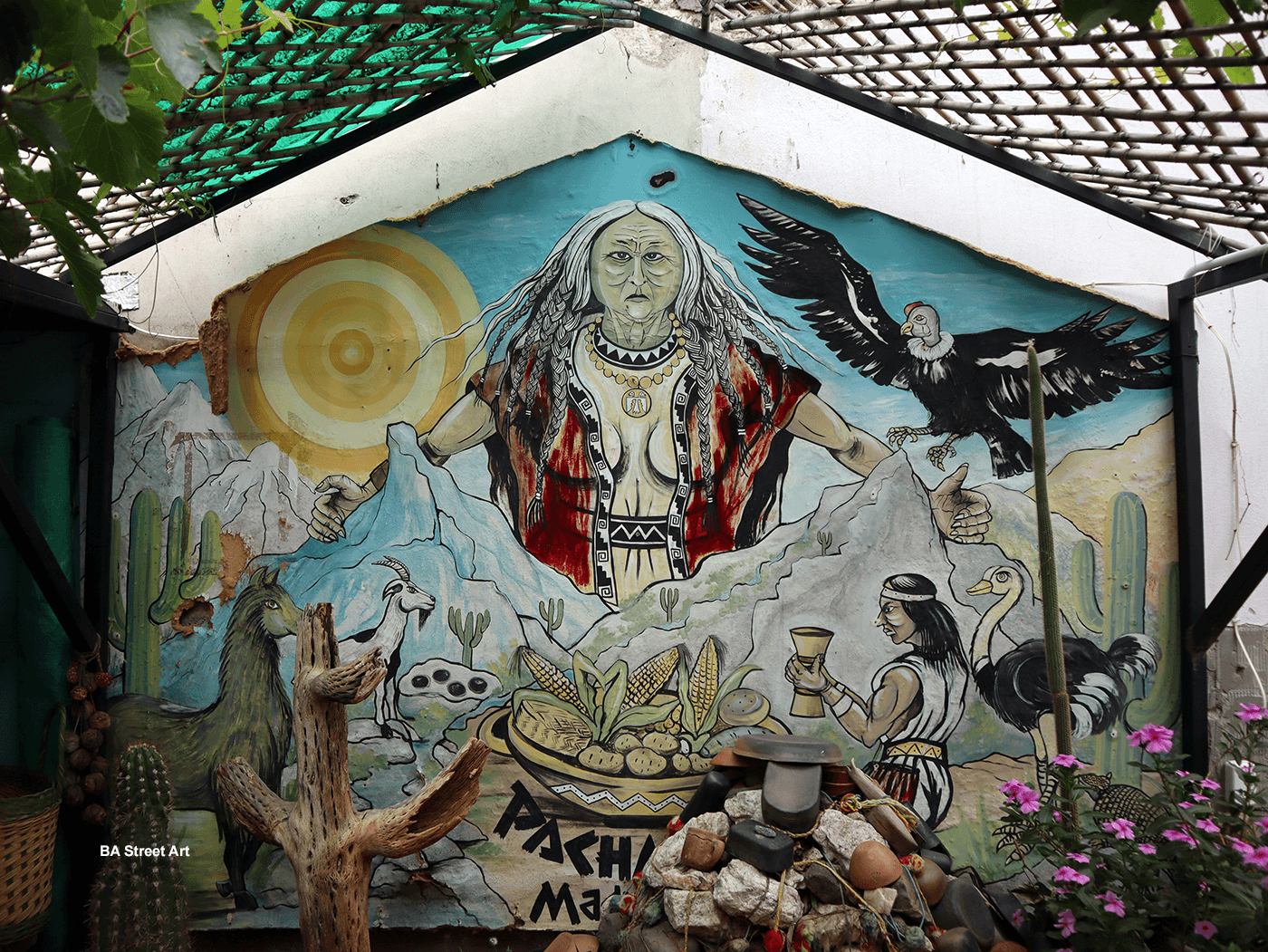
Mural above shrine dedicated to Pachamama in Salta province (photo © BA Street Art)
In the north of Argentina, Pachamama is particularly important in provinces such as Salta, Tucumán, Jujuy and Catamarca where there are many indigenous people and descendants from the Incas who keep alive ancient traditions. In these regions and rural areas, many communities have a close connection to nature and the earth. The shrine (above) in Salta depicts Pachamama rising up behind the mountains flanked by a condor and native animals such as a llama, a mountain goat and an ostrich. At the bottom of the mural is a bowl filled with corn while an indigenous person makes an offering.
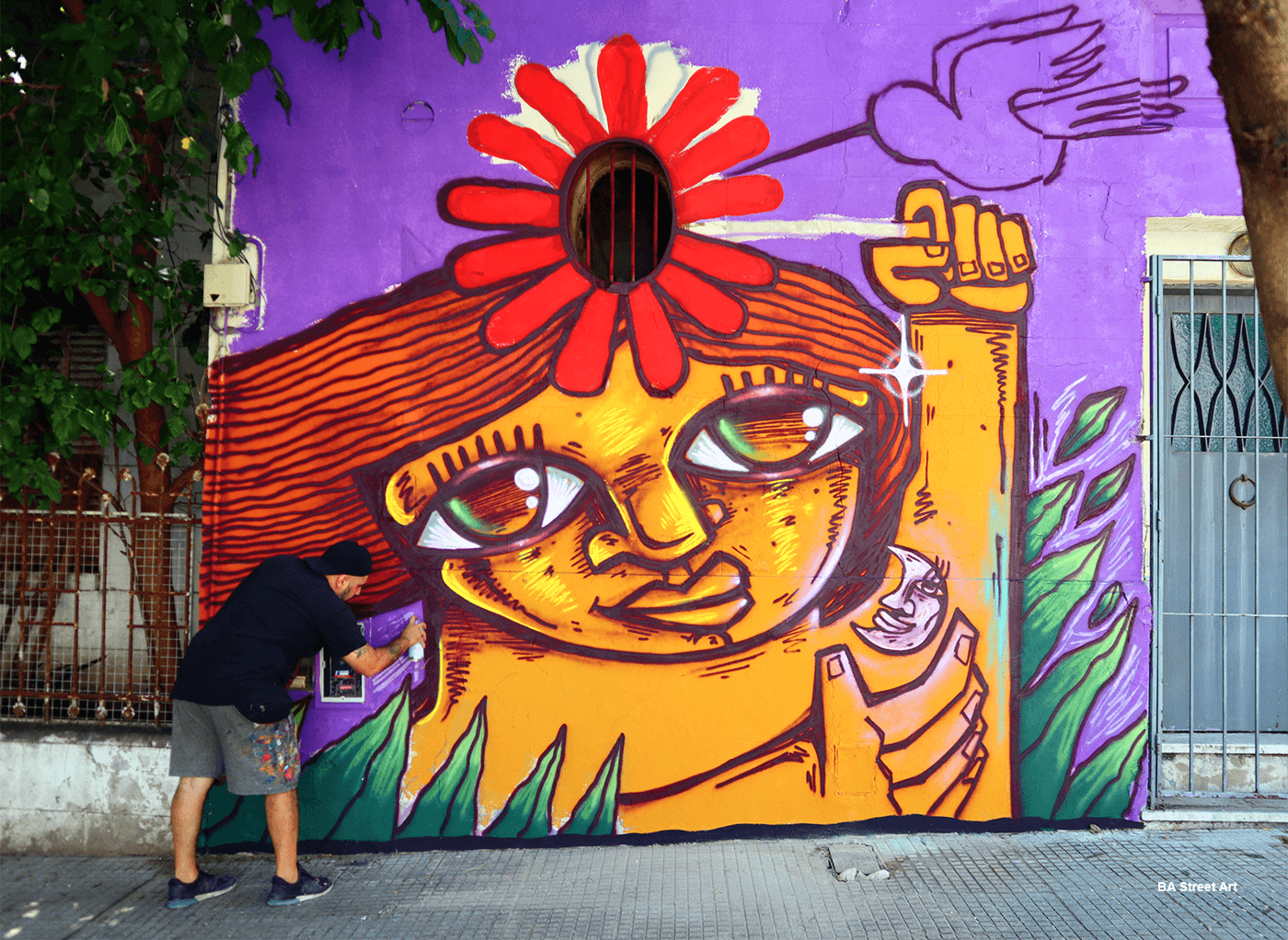
Luxor painting a mural of Pachamama in Buenos Aires (photo © BA Street Art)
Luxor is an Argentine street artist who draws on many influences from indigenous culture in his art. In the above photograph, Luxor can be seen painting a mural of Pachamana holding up a flower that represents her defending nature. The mural was painted in Coghlan in 2025 and was sponsored by our organisation Buenos Aires Street Art.
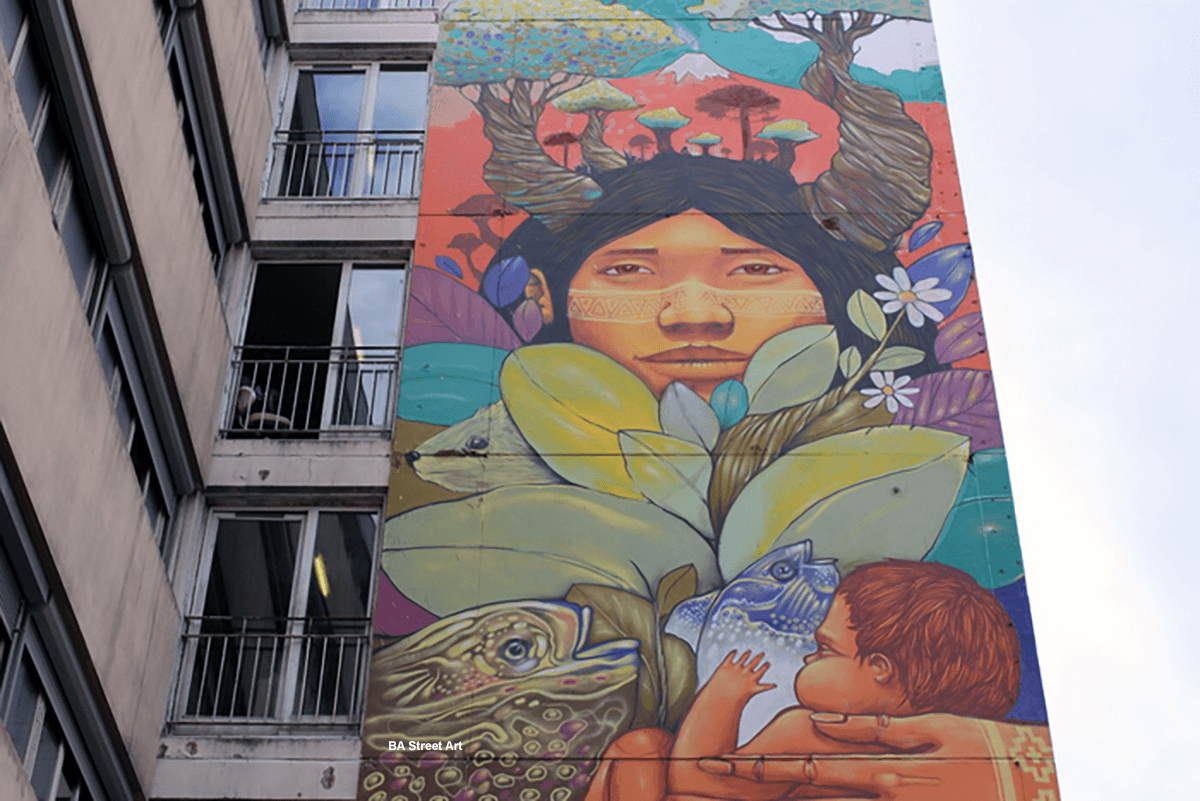
Mural of Pachamama painted by Chilean artist Alapinta (photo © BA Street Art)
Pachamana celebrations can continue throughout the month of August in Peru, Bolivia, northern Argentina, Ecuador, and Chile. Many families and friends might also organise a small ceremony to give thanks to Pachamama. This may consist of digging a small hole in the ground and filling it with corn, fruit, vegetables, coca leaves, even bread and wine. We held a ceremony in our garden last year. These offerings or ofrendas express gratitude for the harvest and respect to Mother Earth. The mural (above) in Paris painted by Chilean street artist Alapinta depicts Pachamama holding a baby surrounded by nature and fish with trees growing our of her head.
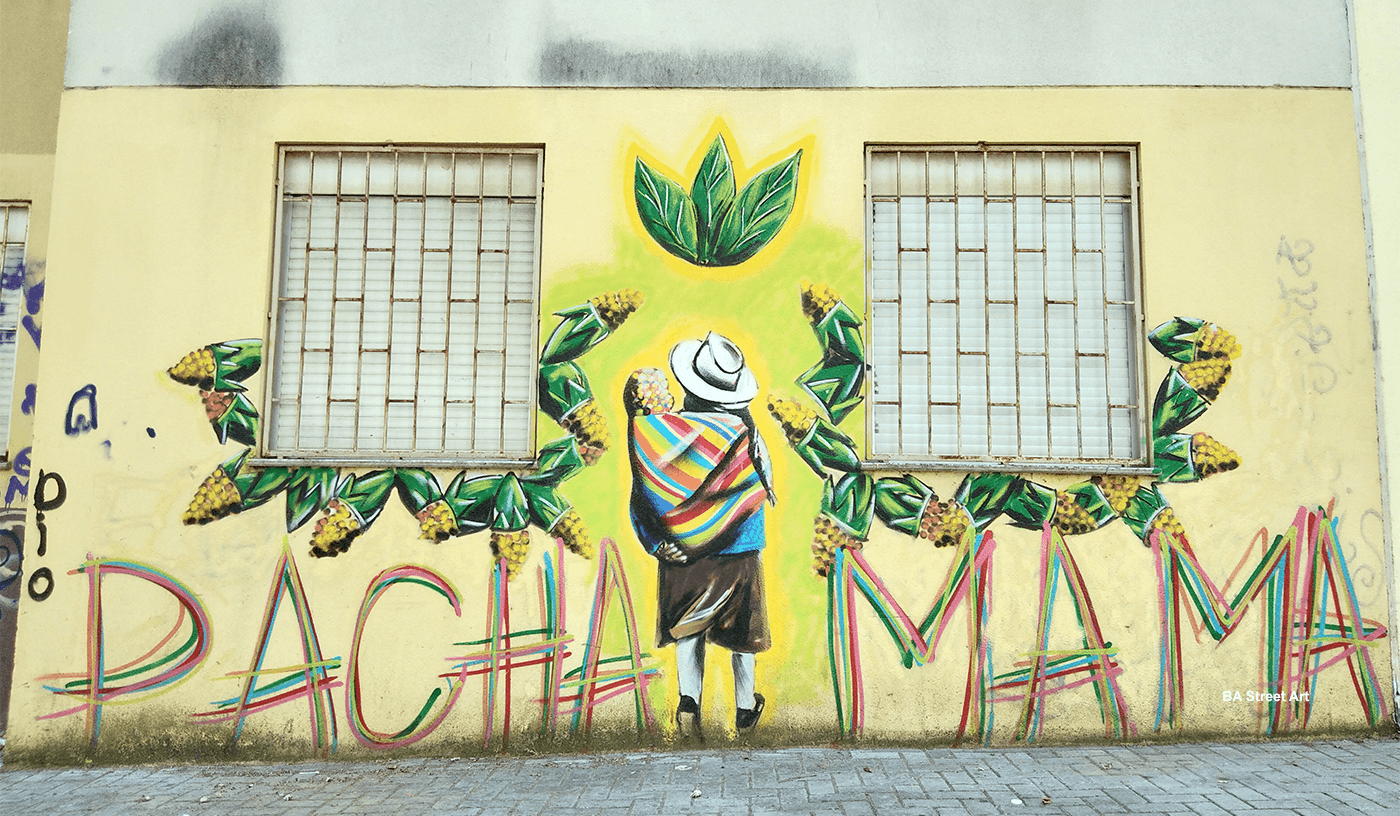
Name – mural dedicated to Pachamama in Lisbon (photo © BA Street Art)
In the Quechua language, the word pacha has a broad meaning – referring to both the living Earth and a sacred force encompassing nature, fertility, space and time. Mama means mother. Pachamama or Mother Earth is a key figure in shamanism being connected with the visible world, ancestors, spirit animals, landscape and nature. Shamanic practices are widely used in South America as a way of helping overcome emotional trauma as well as healing different medical conditions and illnesses.
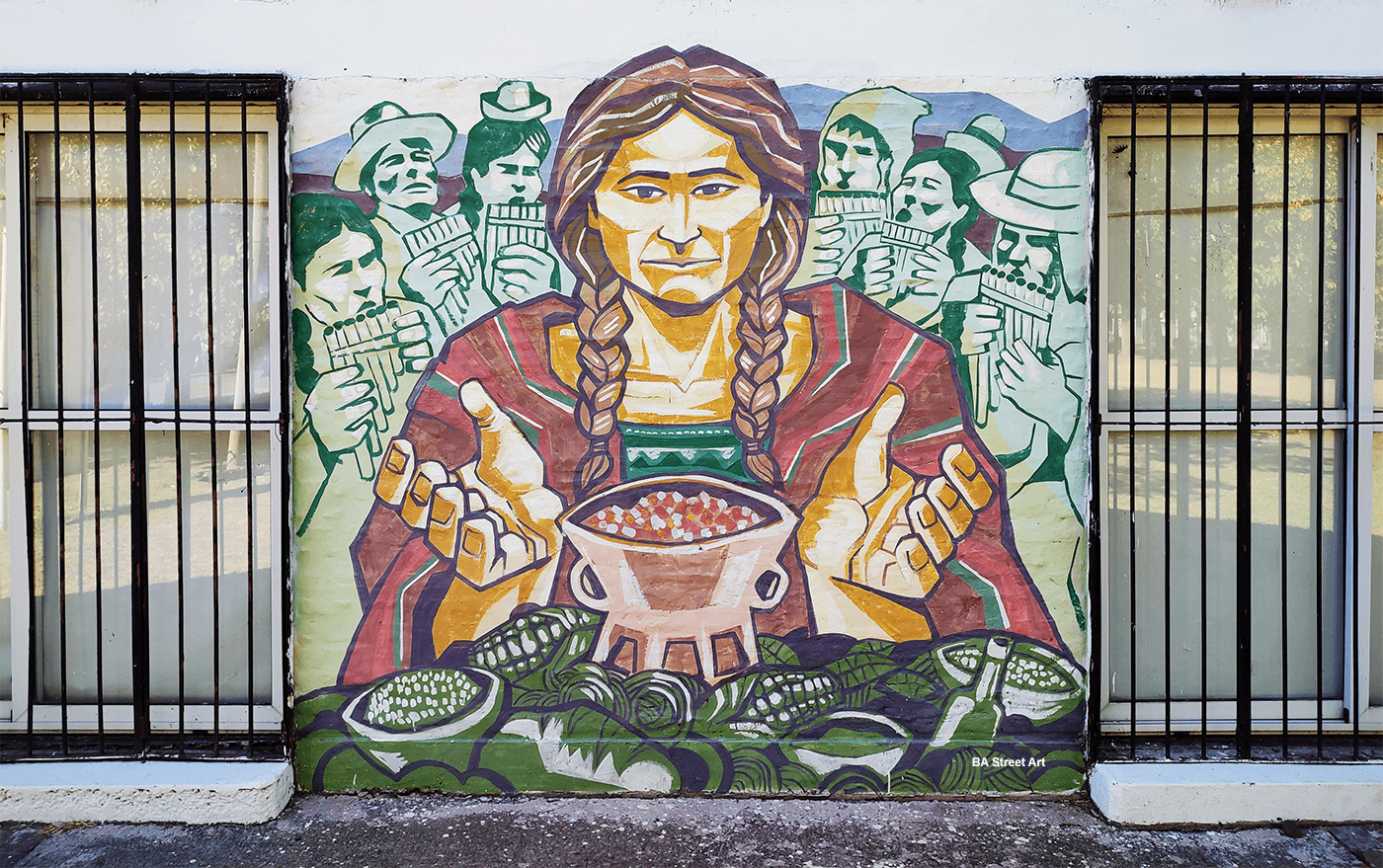
Mural of Pachamama in San Miguel de Tucumán (photo © BA Street Art)
One of the core themes associated with Pachamama in indigenous traditions is that health comes from living in harmony with both the natural and spiritual worlds. In Andean regions and throughout South America many people believe if we respect nature, Mother Earth will help the crops, fruit, vegetables and herbs grow. If we don’t, it can lead to a poor harvest or even drought or famine.
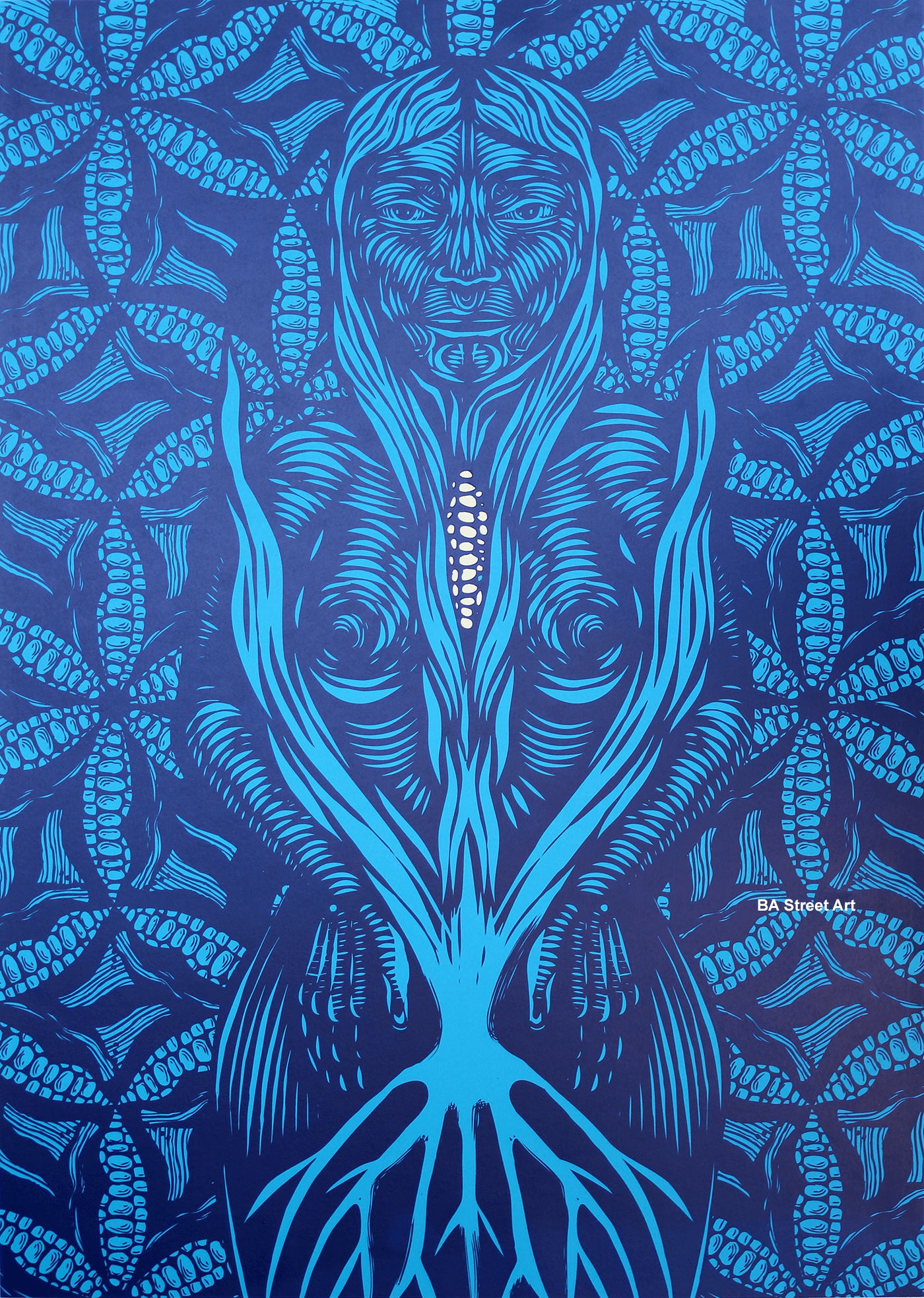
Pachamama surrounded by maiz by Colombian artist Guache (photo © BA Street Art)
Many traditional restaurants in Argentina offer typical dishes on Pachamama Day such as a stew with ground corn similar to locro but with vegetables added rather than meat. Corn or maiz represents life or connection to the earth in indigenous culture.
And in modern society and on a more superficial level, Pachamama has been adopted as a figure associated with ecological awareness, connection to nature, feminine creative energy, grounding and healing or gratitude for the Earth.
All photos © Buenos Aires Street Art